3/30/19, 4:14 PM
Tallinna botaanikaaed, Tallinn, Estonia
Host plant Scilla sp. Plant pathogen. Smut fungi.
🔆 Sunny fine weather, partial shade, Manual WB
Original Instagram post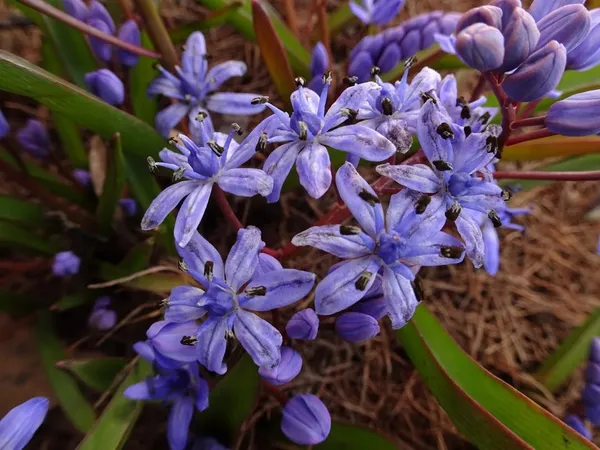
From the latest record: 2019-03-30.
hymenium is not applicable due to the nature of the organism, which is a rust fungus
cap is not applicable, as rust fungi do not form traditional mushroom caps
hymenium attachment is not applicable
stipe is not applicable
spore print is not typically obtained, but the spores are often orangish or rust-colored
ecology is parasitic, typically found on the leaves, stems, and bulbs of Scilla species and other host plants
not applicable, as rust fungi are not typically considered for consumption
size varies, but the fungal structures visible on the host plant are typically very small
Rust fungus that infects members of the Scilla genus, a group of flowering plants commonly known as squills. It forms tiny, pustule-like structures on the surfaces of the host plants, which release spores to infect new hosts. The life cycle of rust fungi is complex and involves different types of spores that serve various purposes in the fungus's reproductive process.
Published in: R. Bauer, M. Lutz, Begerow, Piątek & Vánky. In: Mycol. Res. 112(11): 1301. (2008).
Tallinna botaanikaaed, Tallinn, Estonia
Host plant Scilla sp. Plant pathogen. Smut fungi.
🔆 Sunny fine weather, partial shade, Manual WB
Original Instagram post#fungi #photo #sony #antherospora #antherosporascillae #smutfungi #fungionflower #parasiticfungi #macro #mushroom #photography #tallinn #mycology #naturephotography #fungilove #fungifanatic #estonia #pilz #eestiseened #eesti #seen #tallinnabotaanikaaed #foto #fotografia #ustilaginomycetes #std
Back to the collection · Photography and field notes by @fungarium.info