15/Aug/2026, 11:33 PM
Tallinn, Harju, Eesti
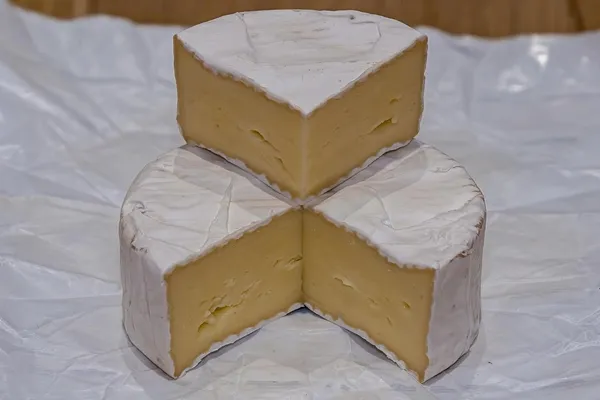
Home lab room Culture on white Camembert cheese
Local shop
Original Instagram postCamembert mold
From the latest record: 2026-08-16.
Fast-growing, dense, white, floccose to cottony mould forming the characteristic bloomy rind of soft cheeses; colonies remain predominantly white
Spore mass white to very pale cream
Domesticated saprobic fungus specialised for cheese surfaces, especially Camembert, Brie and other bloomy-rind cheeses; grows well in cool, protein- and lipid-rich environments
Deliberately cultivated to form the rind and contribute characteristic flavour, aroma and texture
Microscopic filamentous mould forming visible white colonies that may cover the entire cheese surface
Colony size variable with substrate and culture conditions; typically forms a continuous felt-like rind rather than discrete fruit bodies
Mushroom-like, creamy, fatty to mildly ammoniacal during advanced cheese ripening
Mild, mushroomy, creamy and characteristic when growing as an intended cheese-ripening culture
Conidiophores typically terverticillate with rough-walled stipes; conidia smooth, ellipsoid to subglobose, ~3–5×2.5–4.5 µm, produced in chains
Domesticated white cheese mould forming the soft, snowy rind of Camembert and Brie
1906). Bull. U.S. Department of Agriculture, Bureau Animal Industry 82: 33.
Tallinn, Harju, Eesti
Home lab room Culture on white Camembert cheese
Local shop
Original Instagram post#penicilliumcamemberti #mushroomphotos #fungimacro #cheesefungi #naturephotography #hongos #morchellaesculenta #morchella #yellowmorel #ümarmürkel #mürkel #pallohuhtasieni #speisemorchel #morchel #mushroomphoto #fungiphoto #seenefotod #pilzefotografieren #фотогрибов #sieniäkuvia #houby #mycology #fungistudy #mushroom #fungi #ascomycete #morel #pezizales #pilze
Back to the collection · Photography and field notes by @fungarium.info