🇺🇸 American Gooseberry Mildew - 🇩🇪 Amerikanischer Stachelbeer-Mehltau - 🇪🇪 Sõstra-jahukaste - 🇷🇺 Подосфера мертво-ягодная 8/9/26
ℹ️ Hymenium: No exposed macroscopic hymenium; sexual spores develop within asci enclosed in globose chasmothecia, while the conspicuous white powdery coating consists mainly of superficial mycelium, conidiophores and chains of conidia
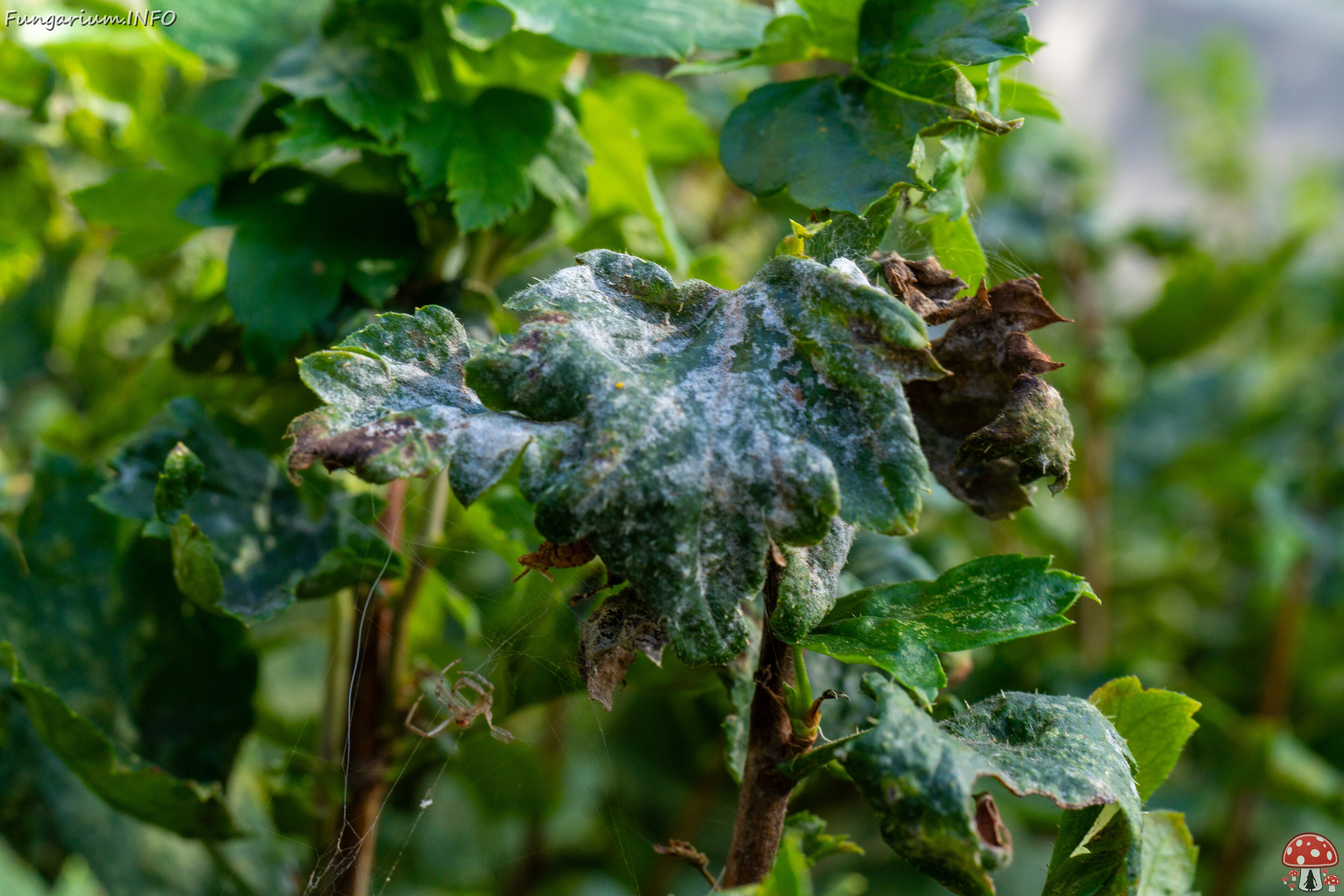
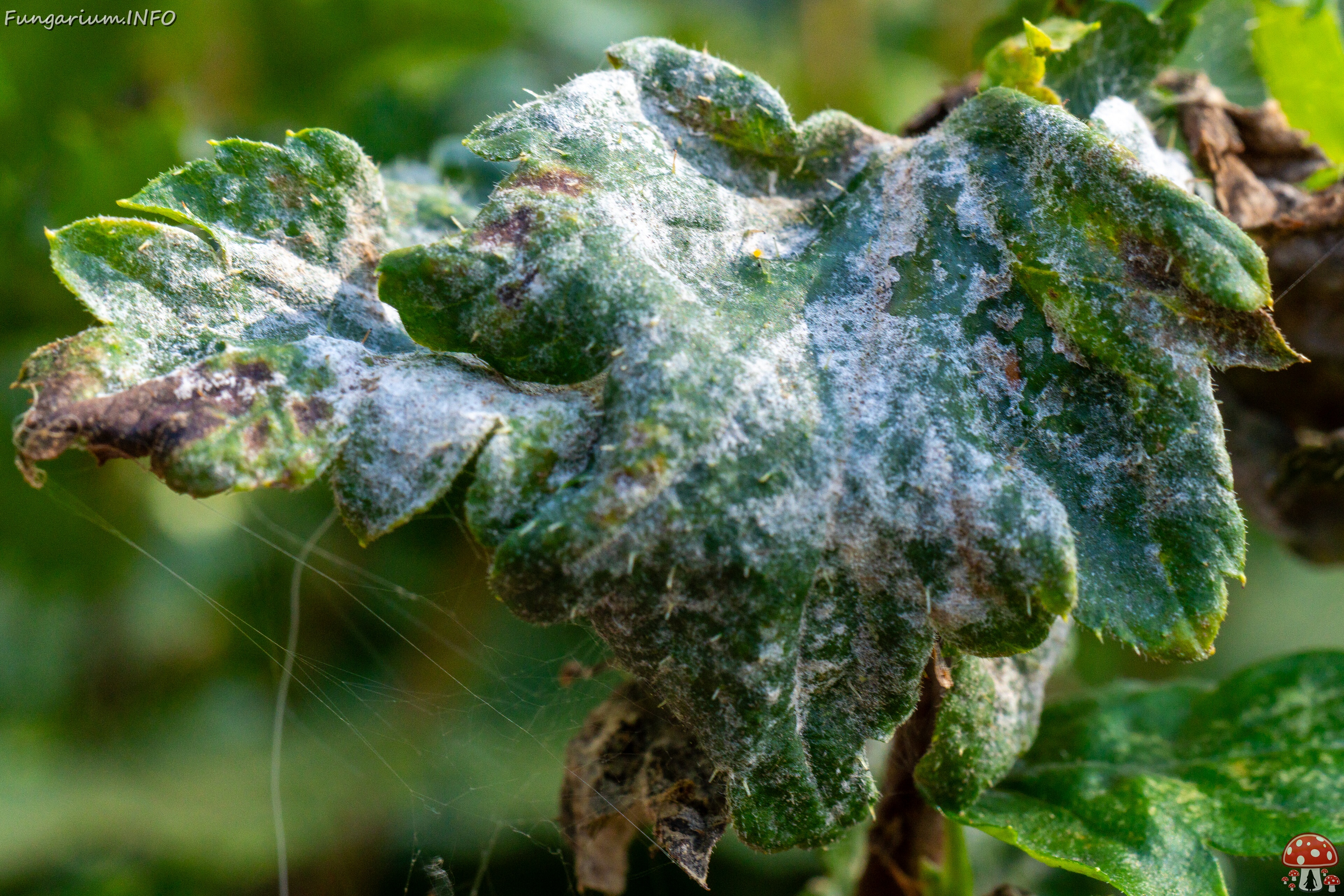
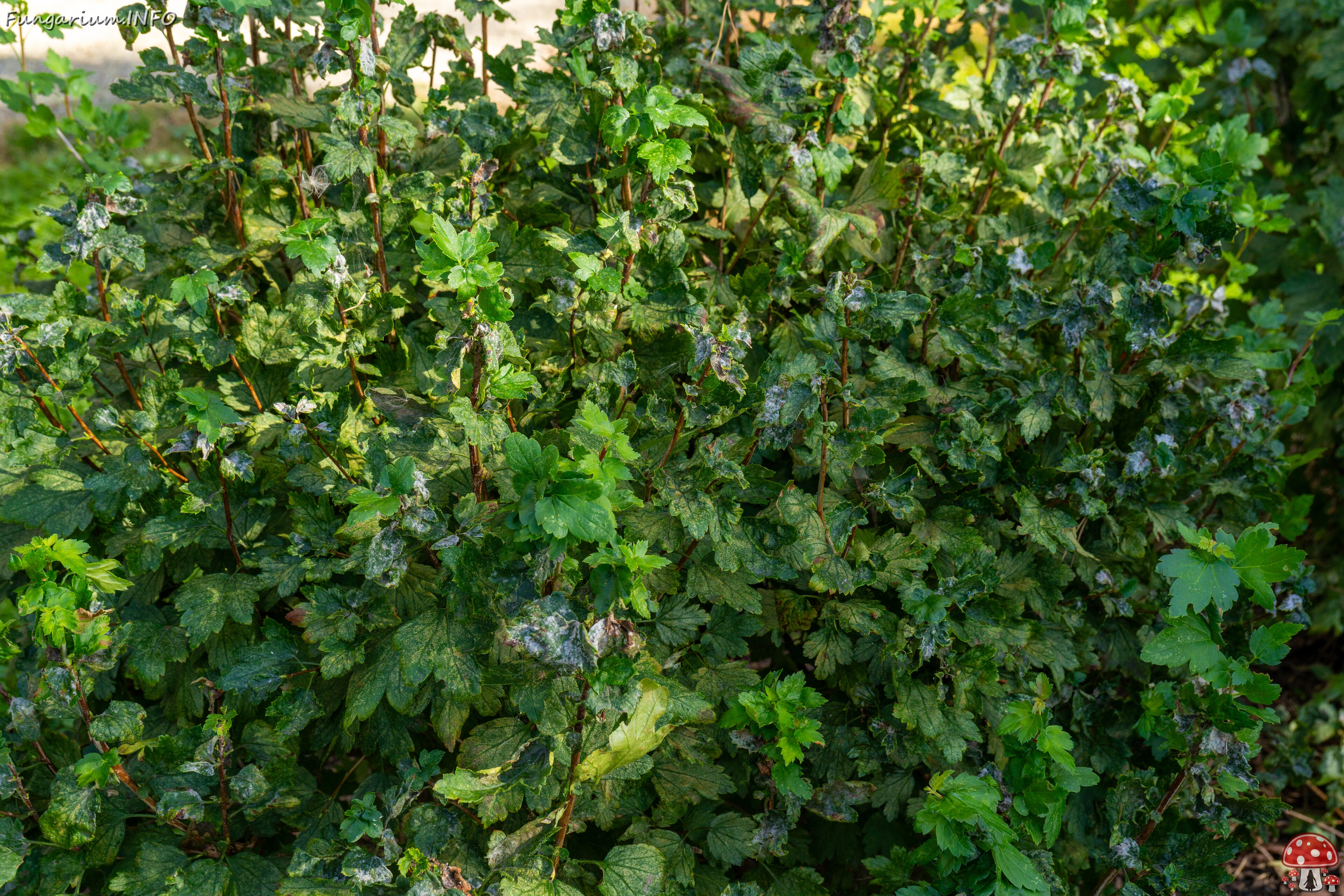
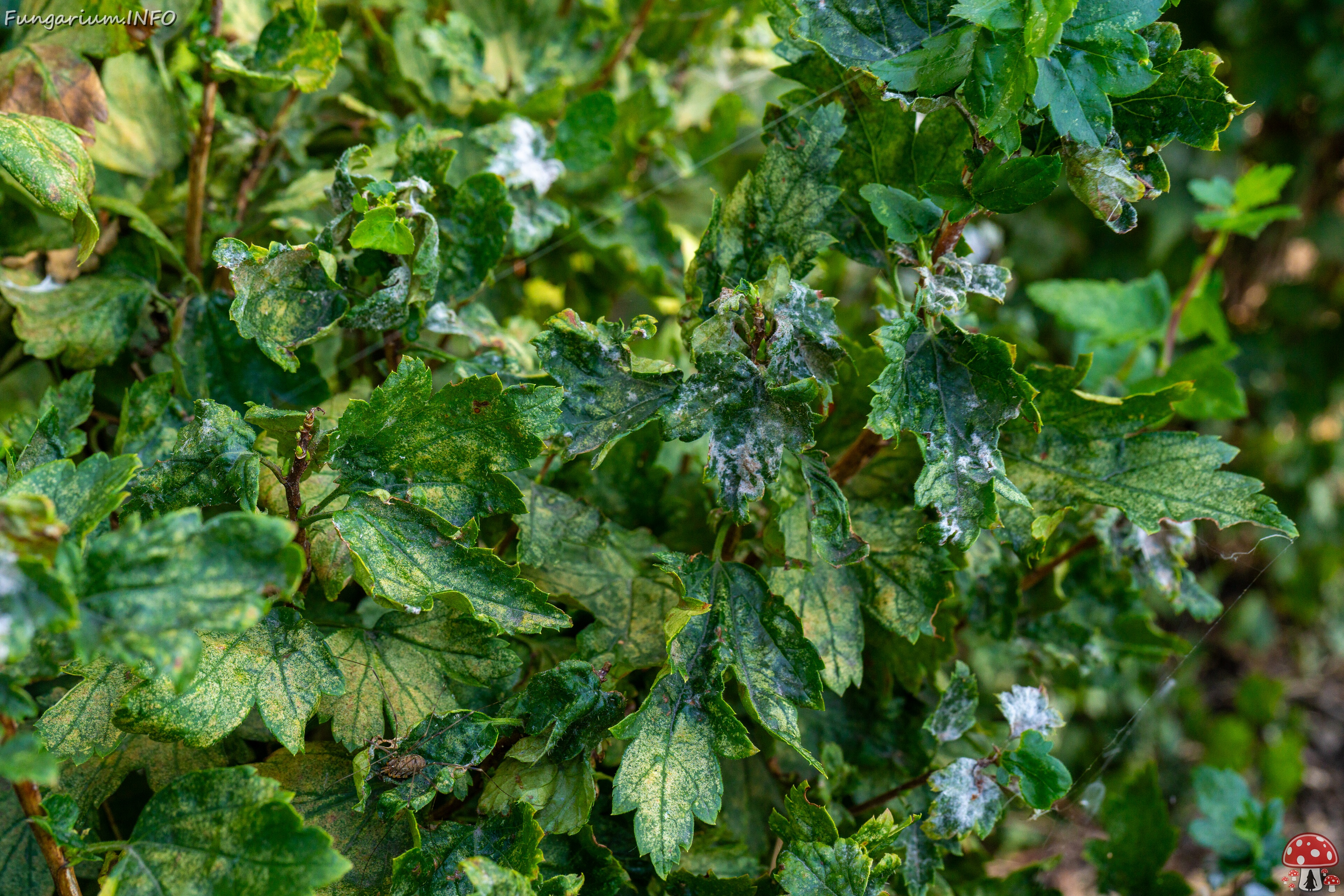
ℹ️ Body: White, flour-like superficial colonies on leaves, young shoots and fruits, initially patchy but often becoming confluent; ageing colonies turn greyish, brown to dark brown, with minute dark chasmothecia developing later in the season
⚪⚫ Spore mass white, powdery conidial mass; mature chasmothecia dark brown to black
🌿🍇 Obligate biotrophic parasite of Ribes species; infects leaves, young shoots and berries; conidia spread infections through the growing season while chasmothecia may overwinter and release ascospores in spring
📏 Microscopic
📐 Chasmothecia ∅ ~92–104 µm
🔬 Hyphae ~4–7 µm wide; conidiophores erect, cylindrical, ~92–165 × 9–11 µm; conidia produced in chains, broadly ellipsoid-ovoid to doliiform, ~22–31 × 14–22 µm, containing conspicuous fibrosin bodies; chasmothecia globose, ~92–104 µm, with few mycelioid appendages; each chasmothecium contains a single 8-spored ascus ~80–96 × 60–72 µm; ascospores ellipsoid-ovoid to subcylindrical, ~20–26 × 10–14 µm
🔤 Powdery mildew of gooseberries and currants

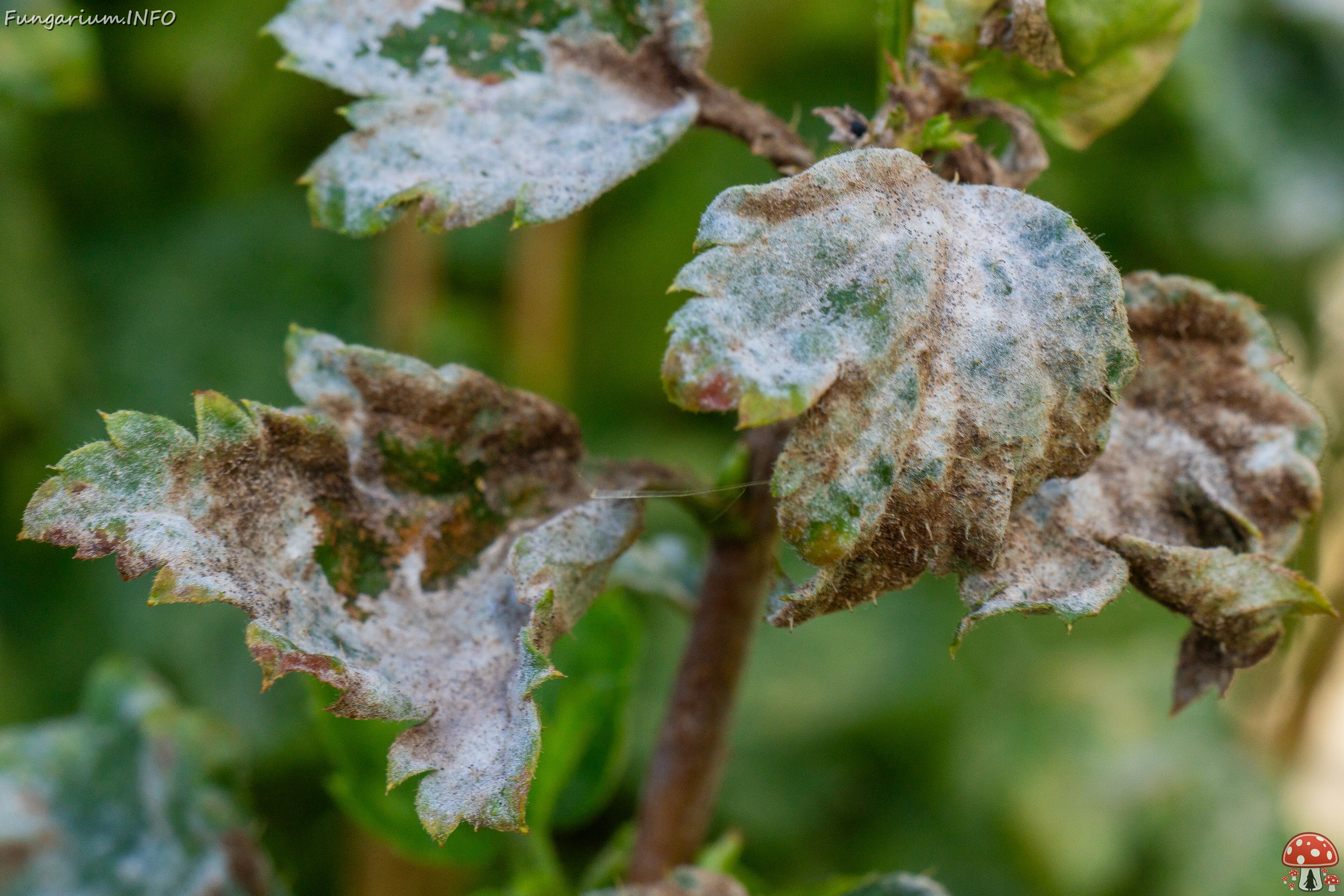
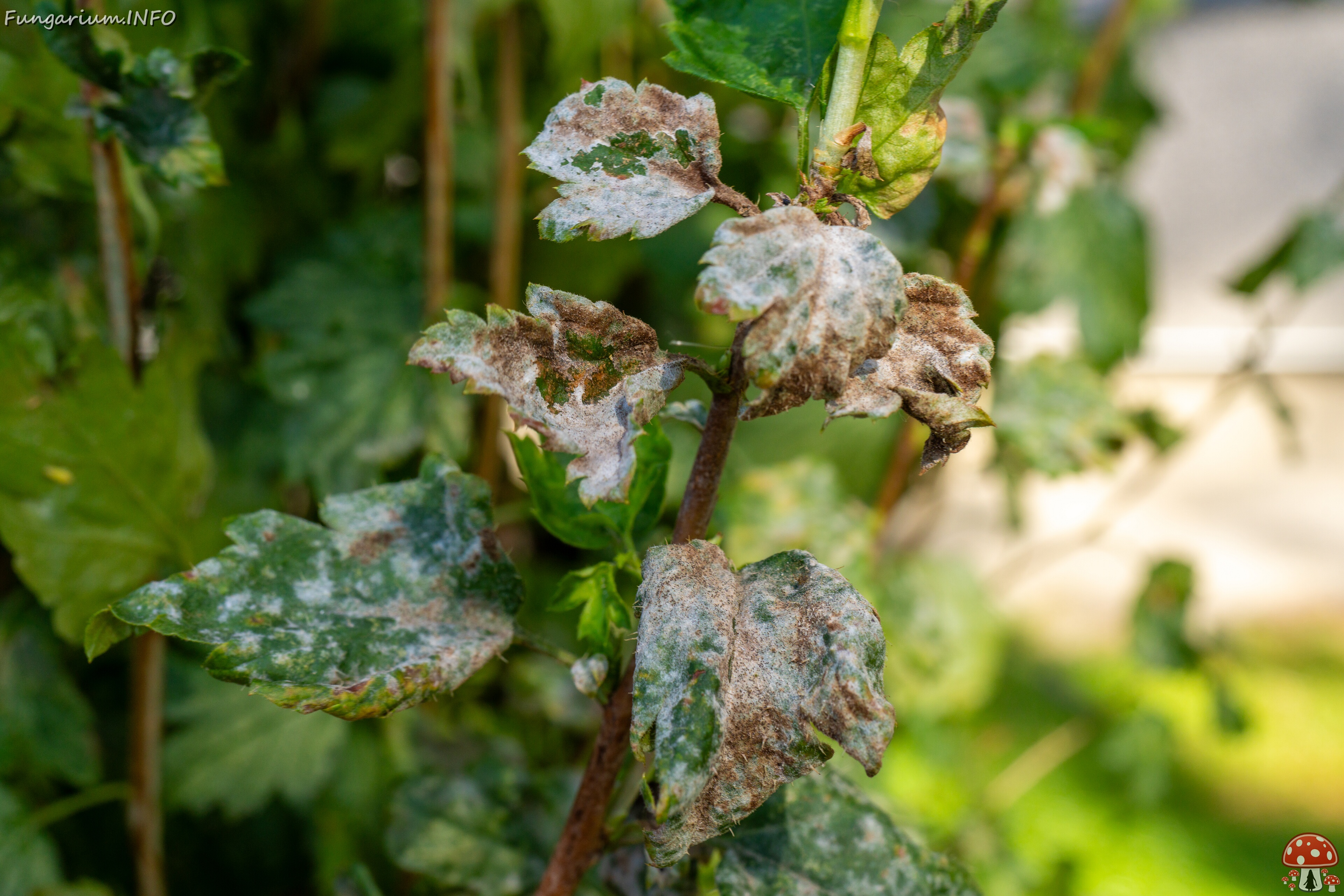
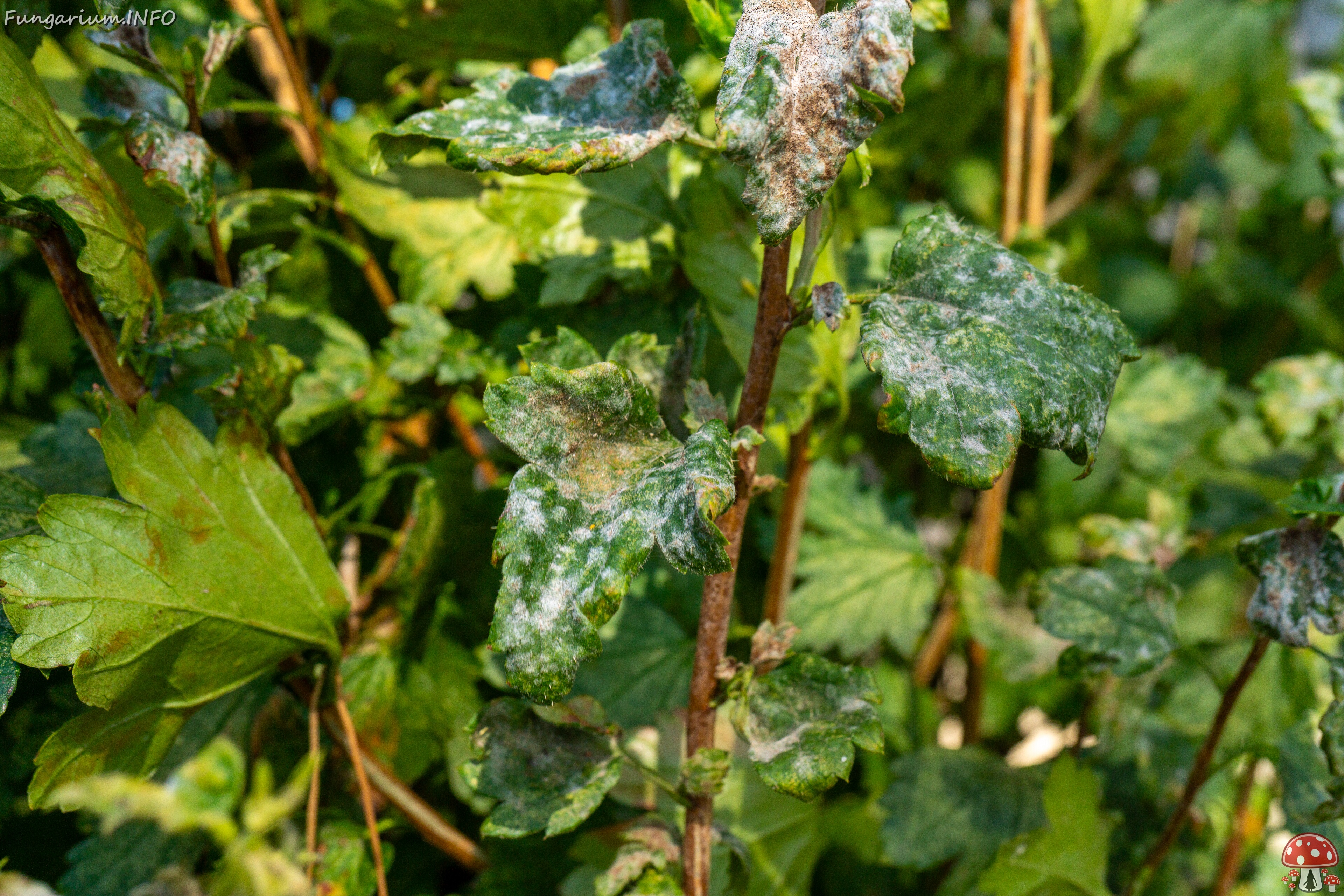
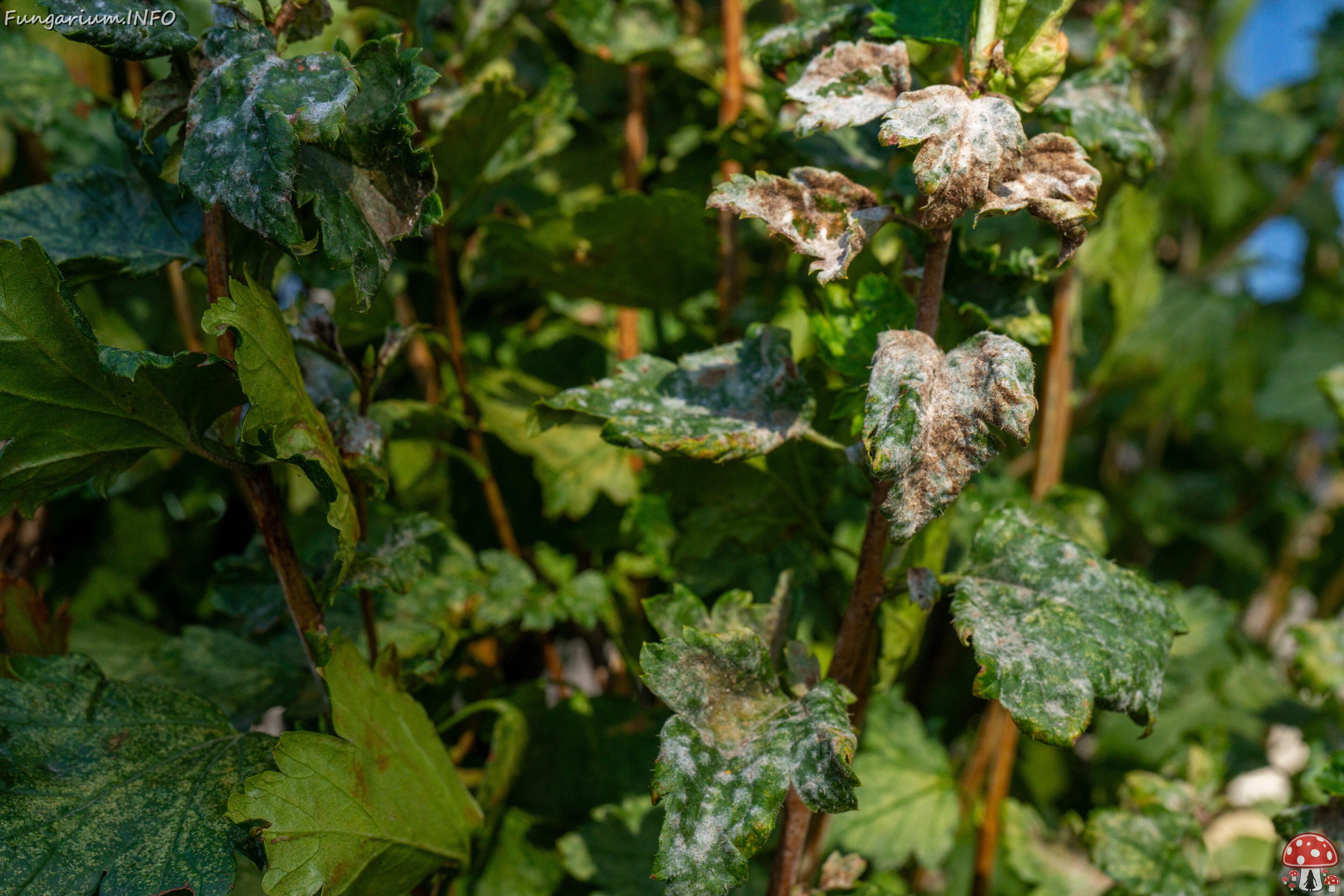
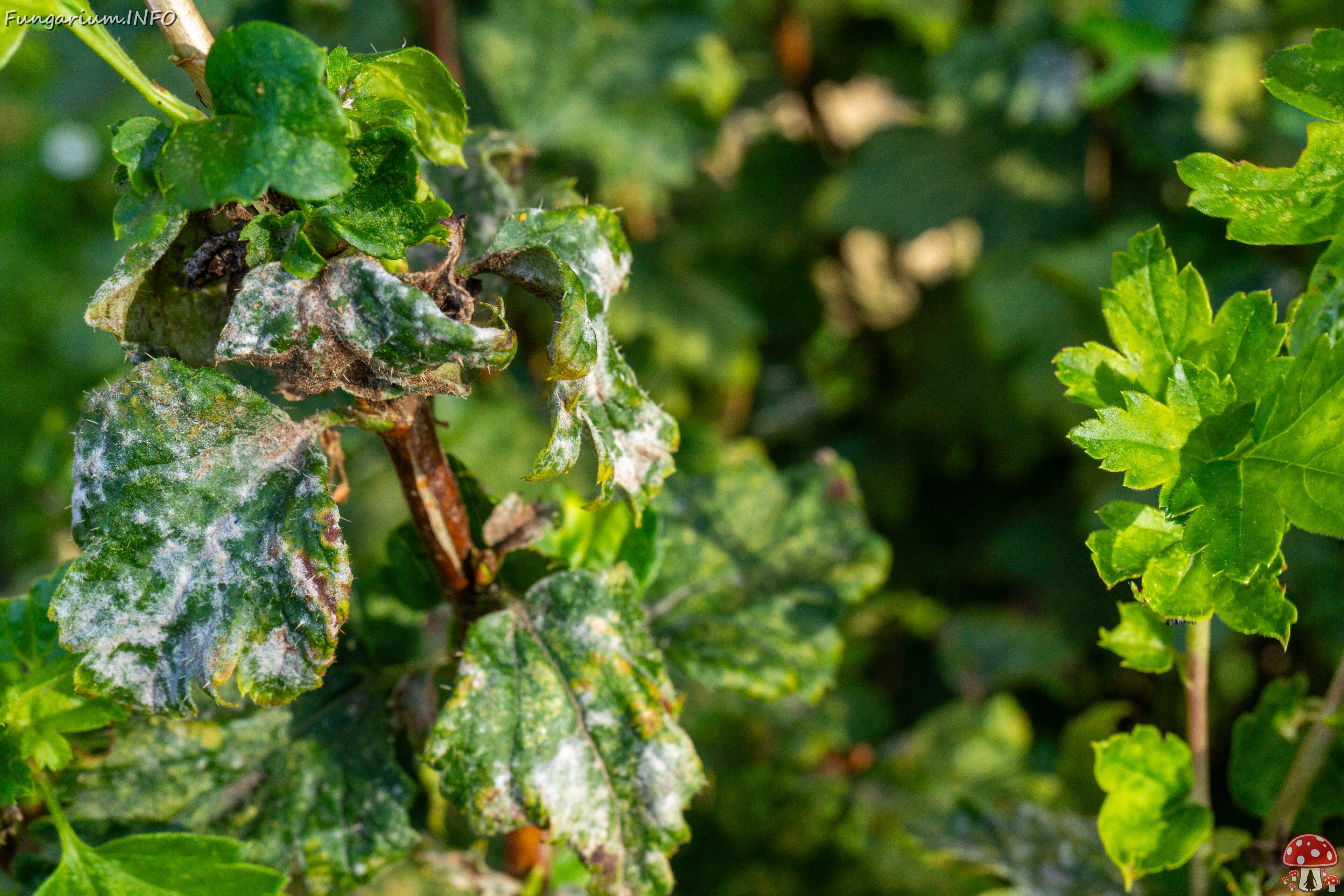
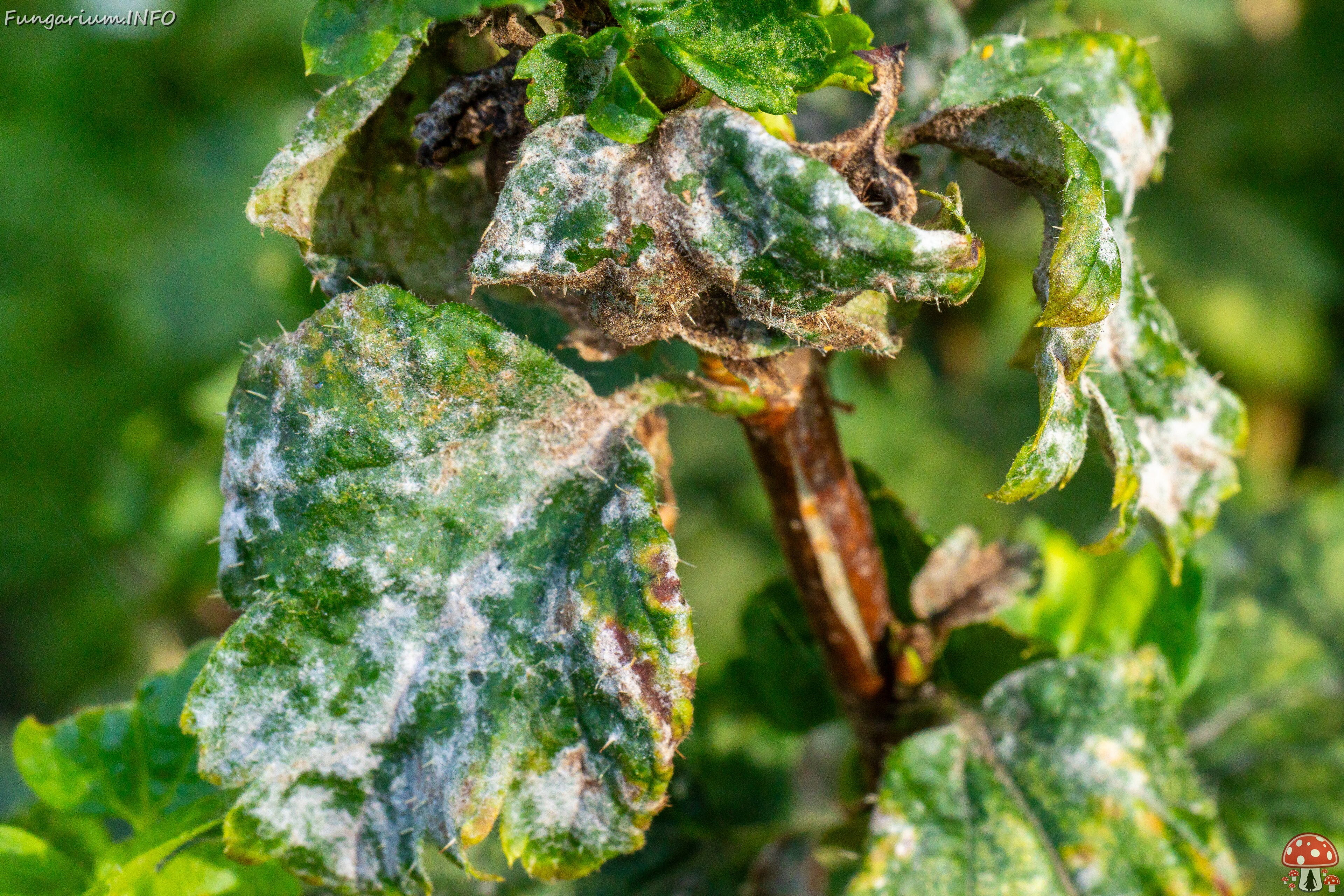
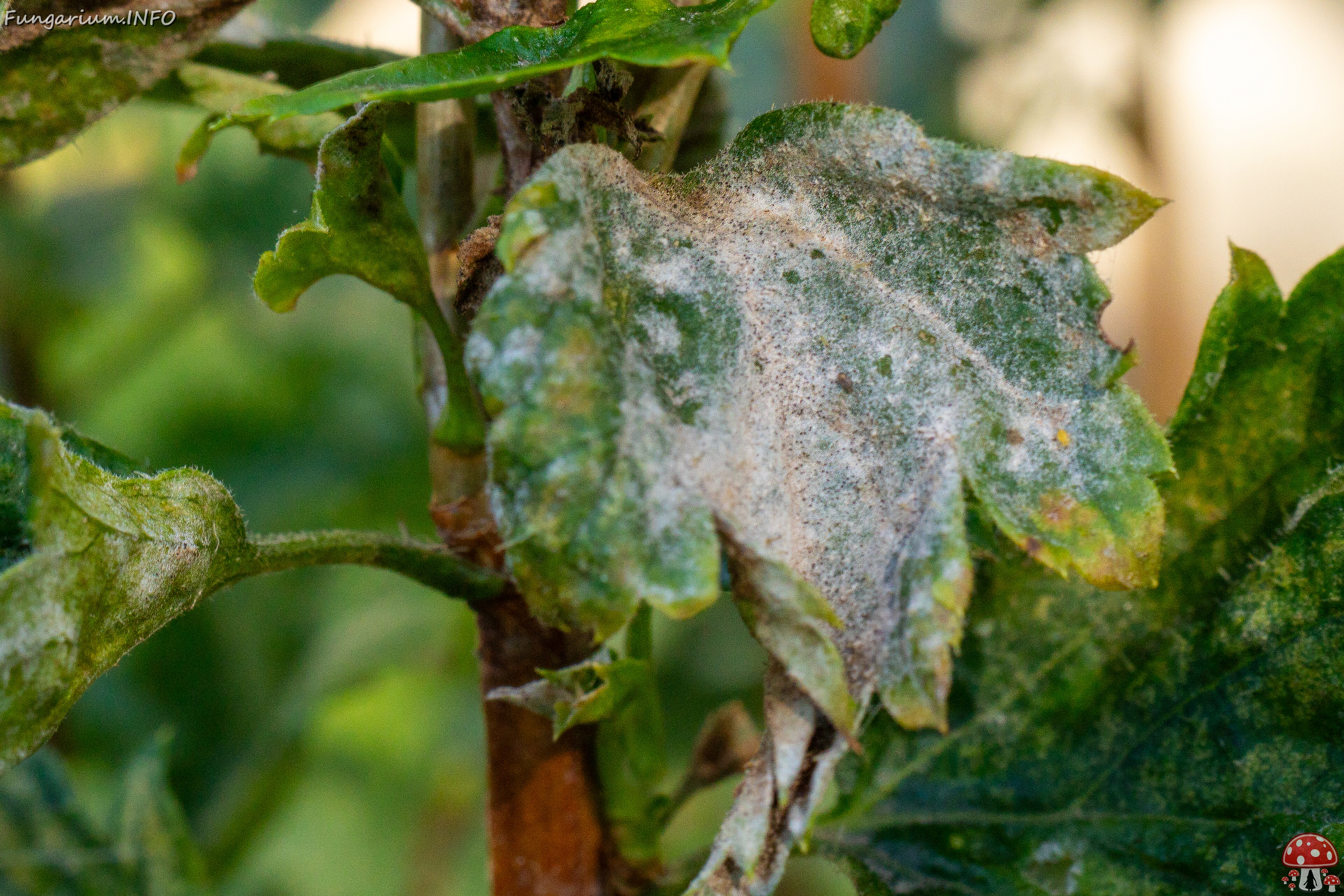
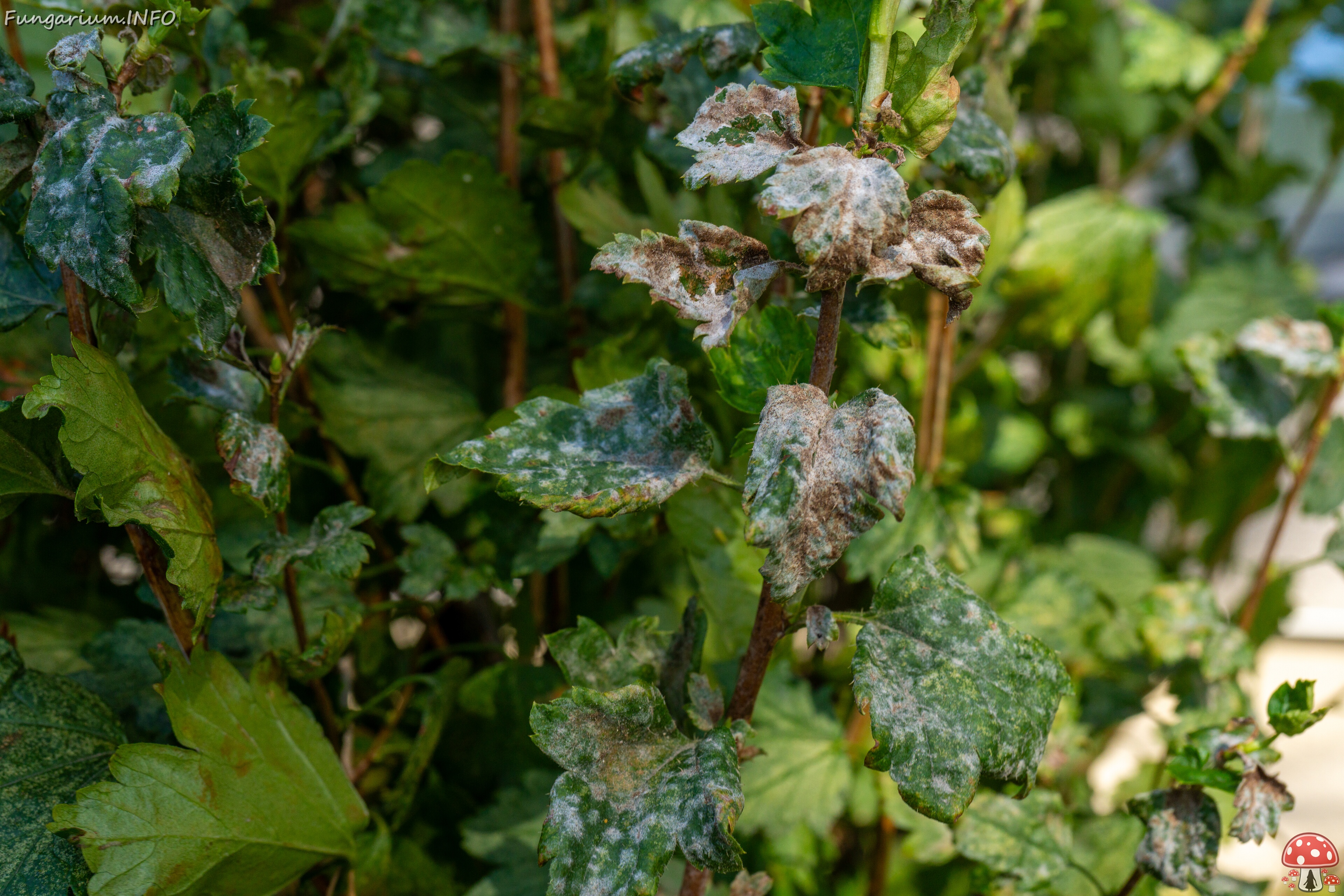

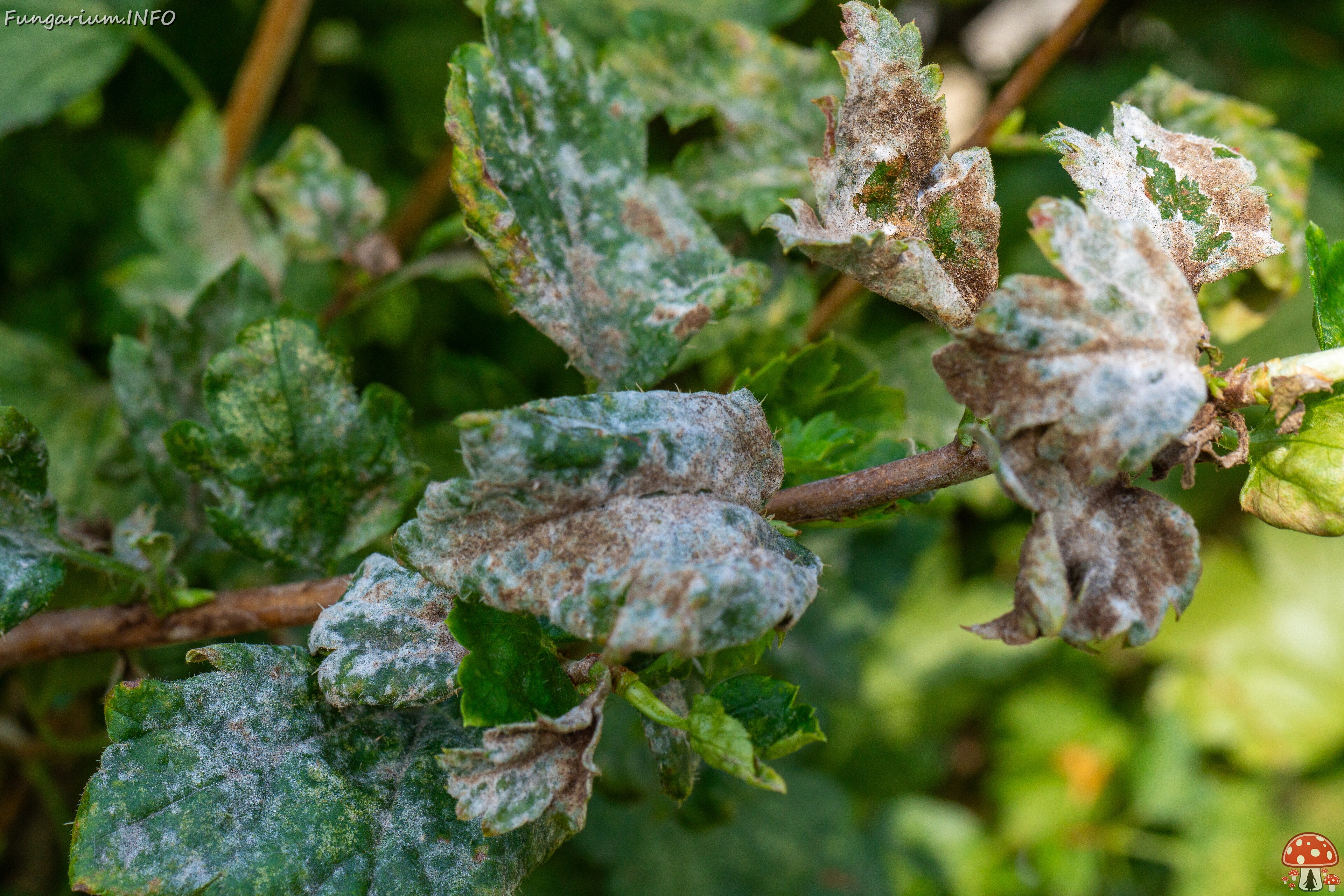
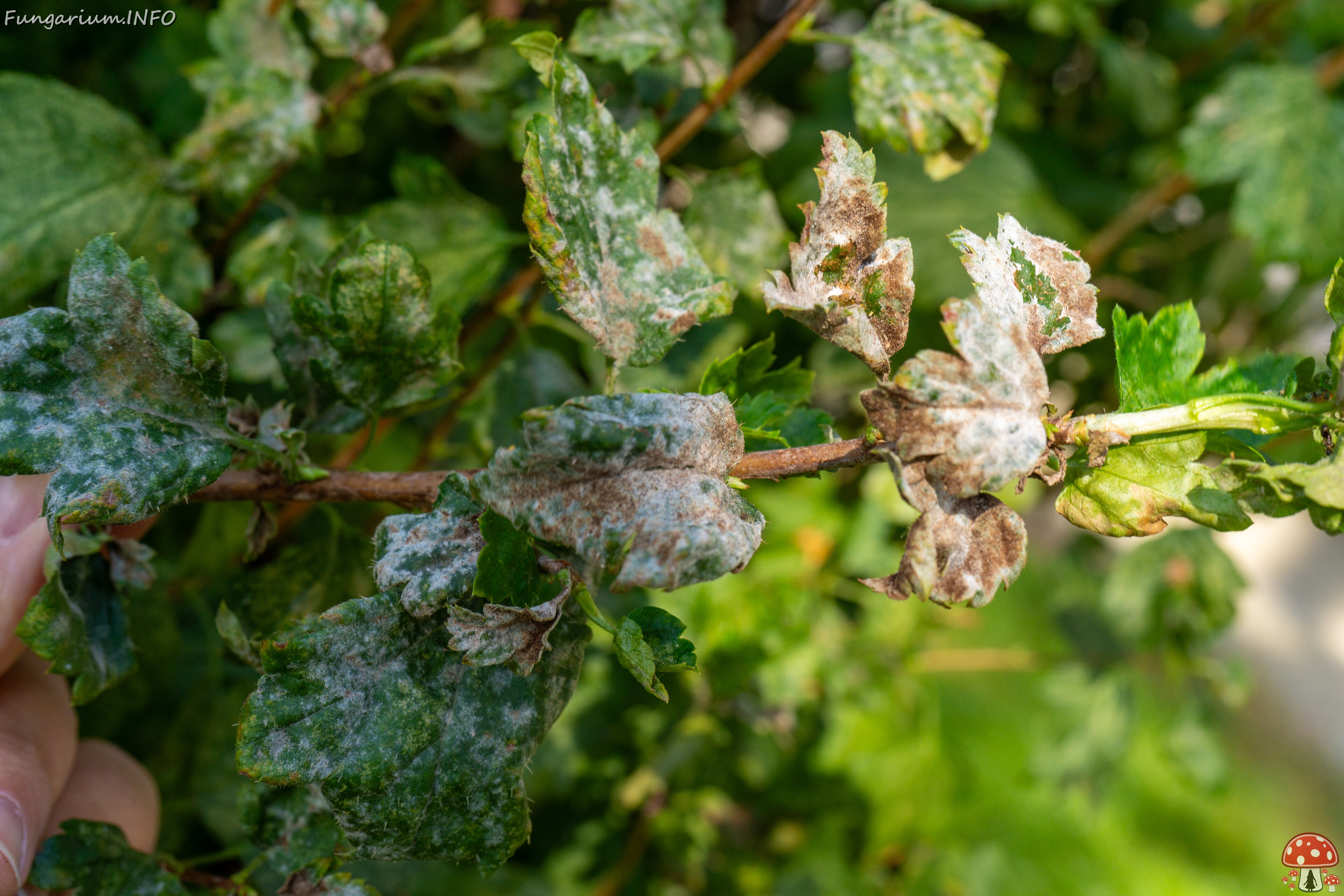



🇺🇸 American Gooseberry Mildew - 🇩🇪 Amerikanischer Stachelbeer-Mehltau - 🇪🇪 Sõstra-jahukaste - 🇷🇺 Подосфера мертво-ягодная