🇬🇧 common coral slime - 🇩🇪 Geweihförmiger Schleimpilz - 🇪🇪 Harjas-limasarvik - 🇷🇺 Цератиомикса кустарничковая 8/3/24—7/25/26
🆔 Ceratiomyxa fruticulosa (O.F.Müll.) T.Macbr.
ℹ️ Plasmodium phase: Watery, translucent to whitish, sometimes faintly yellowish or pinkish
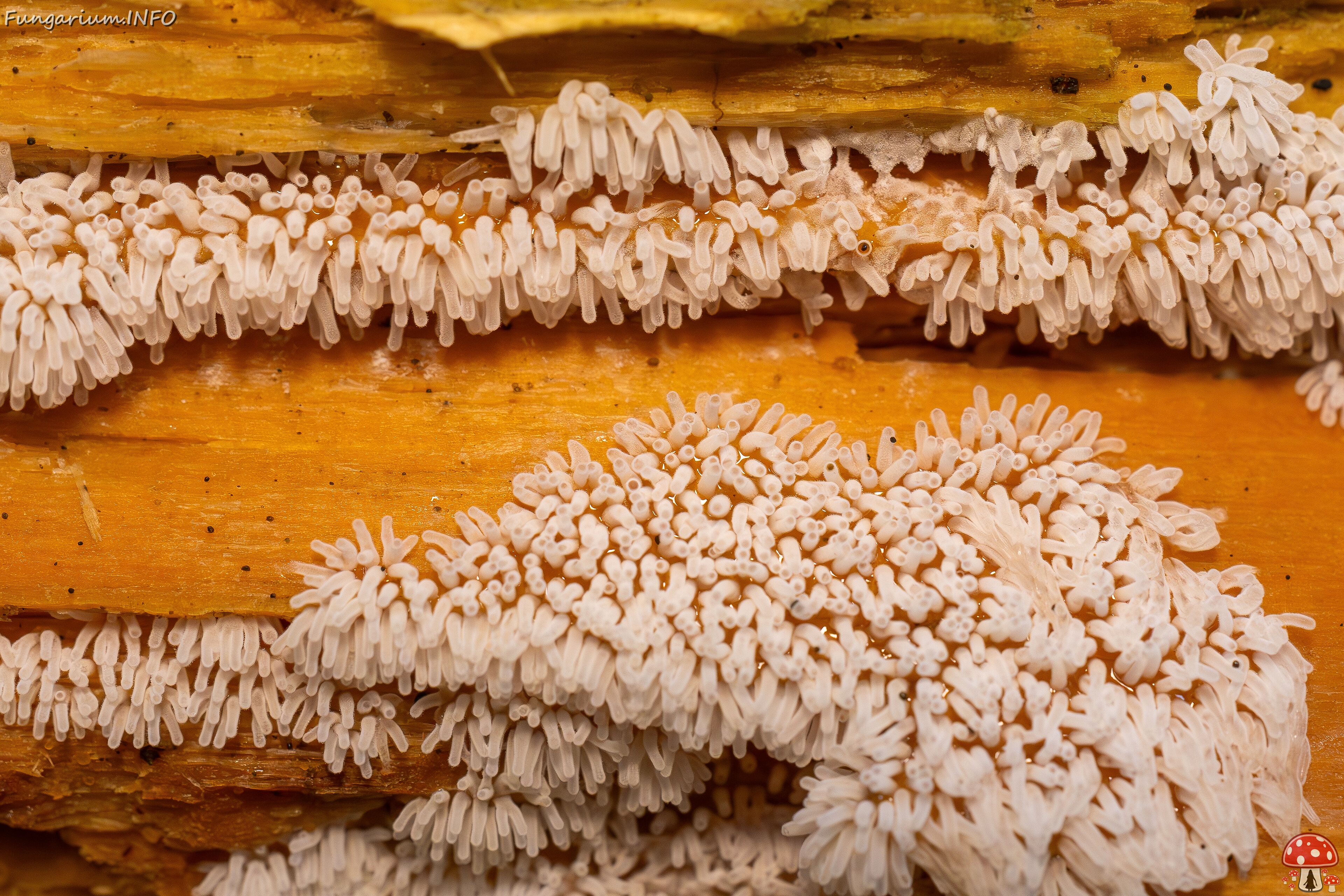
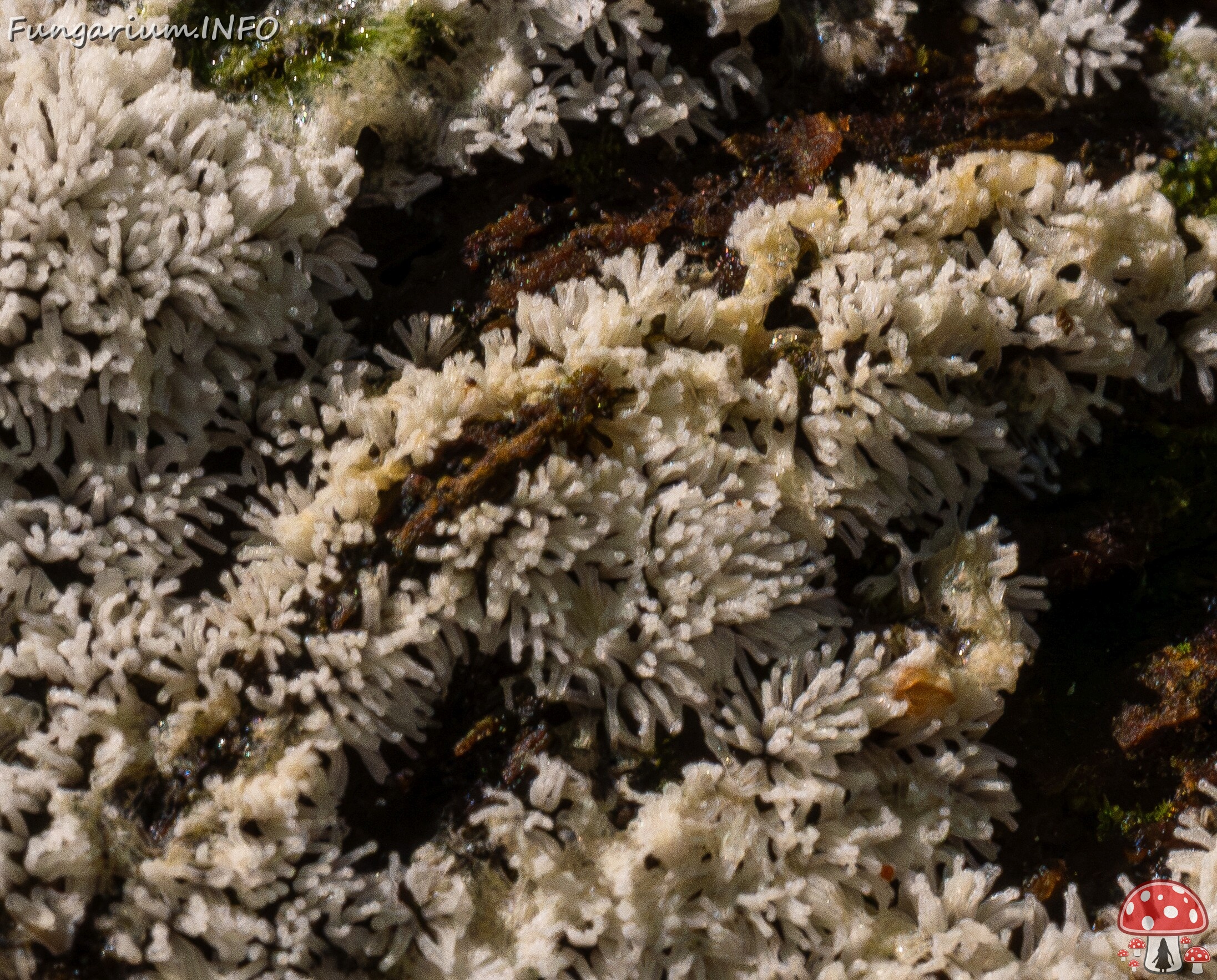
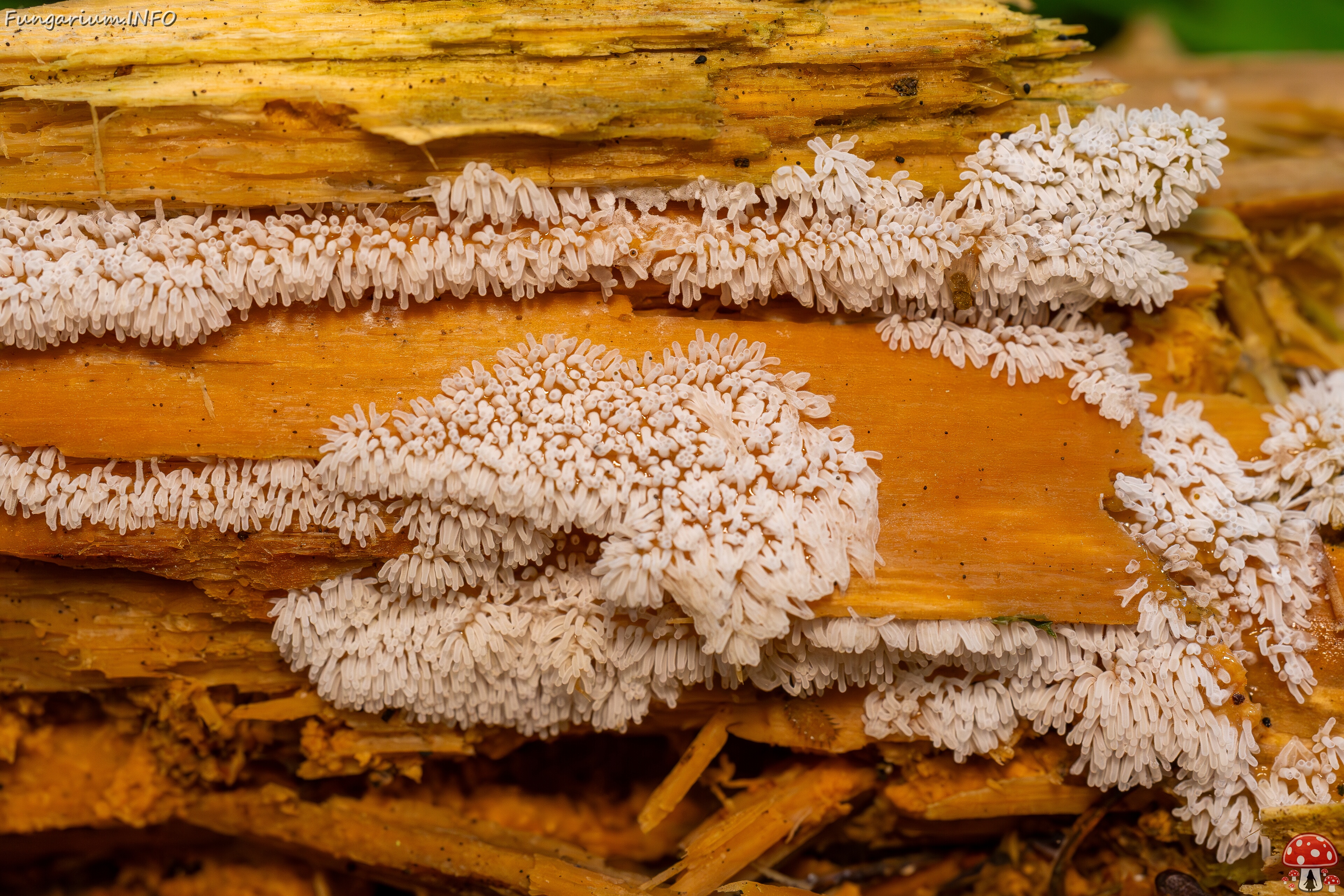
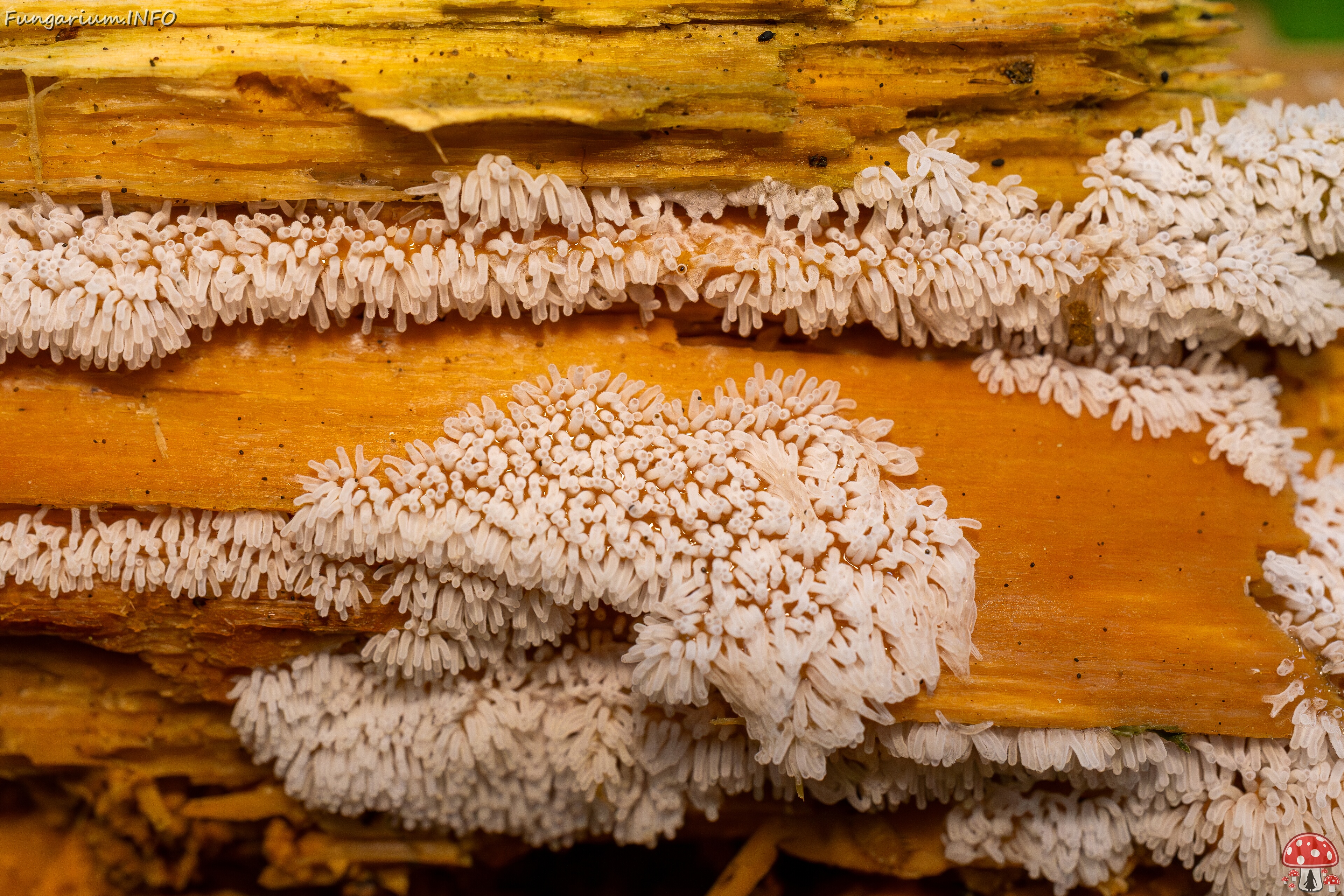
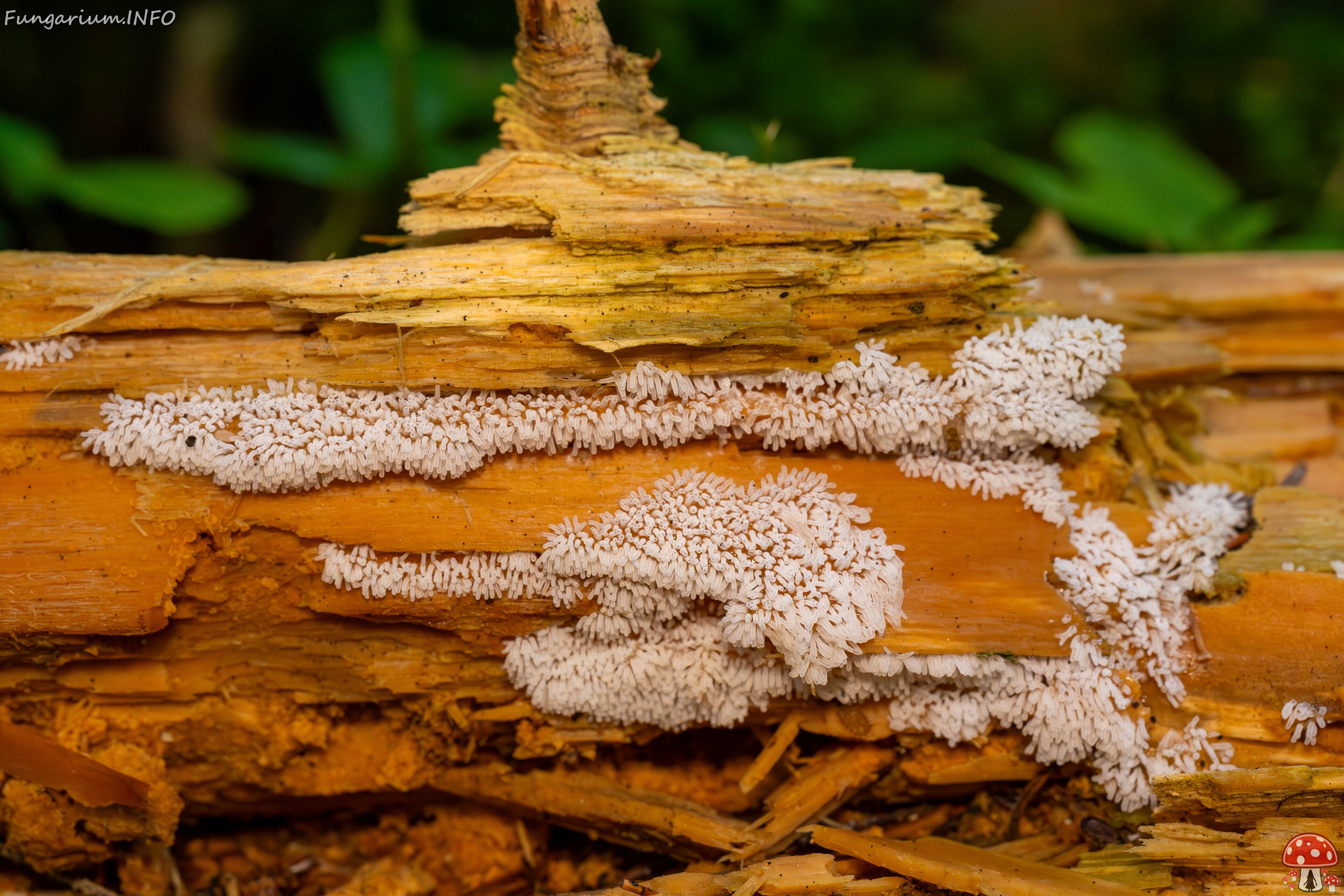
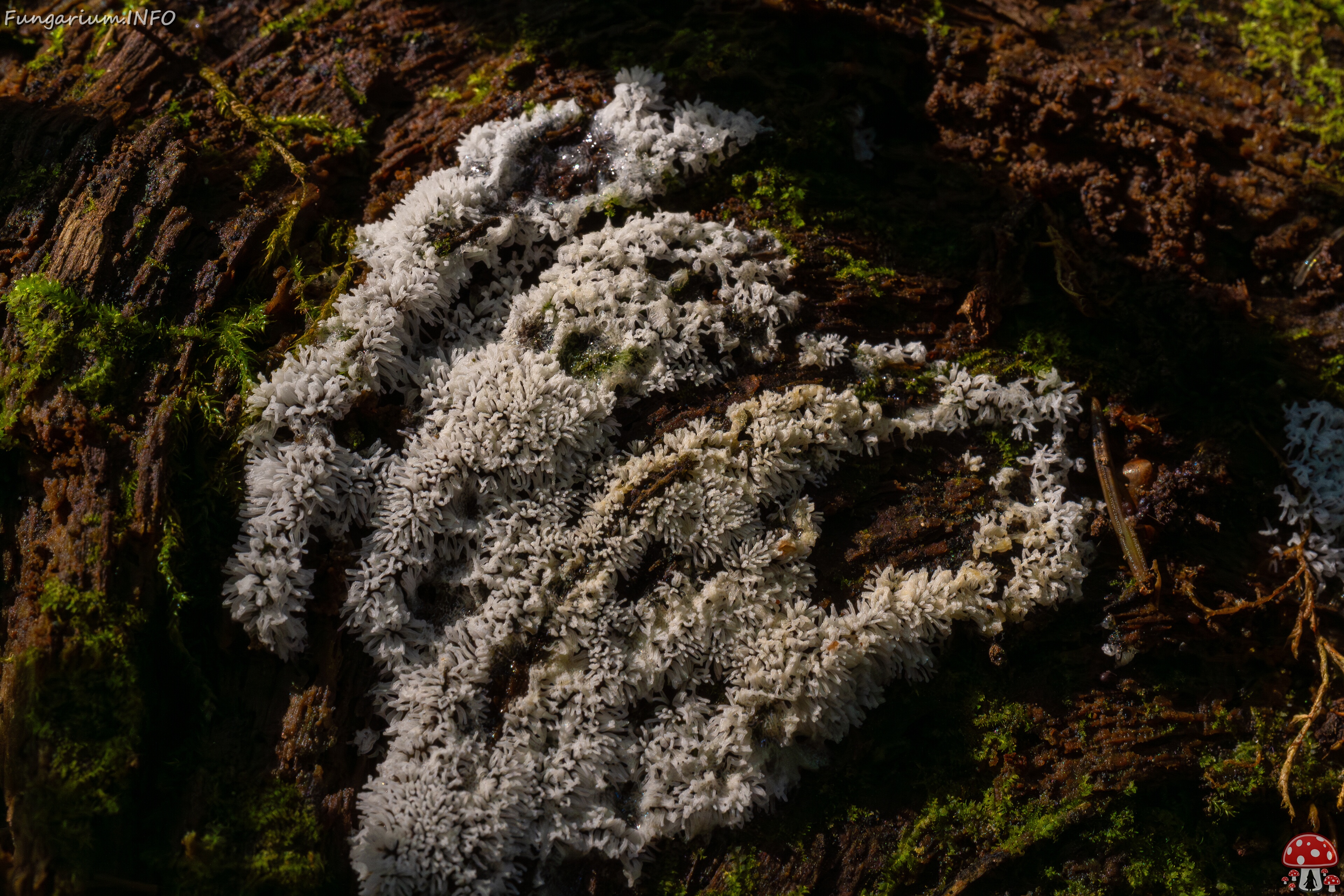
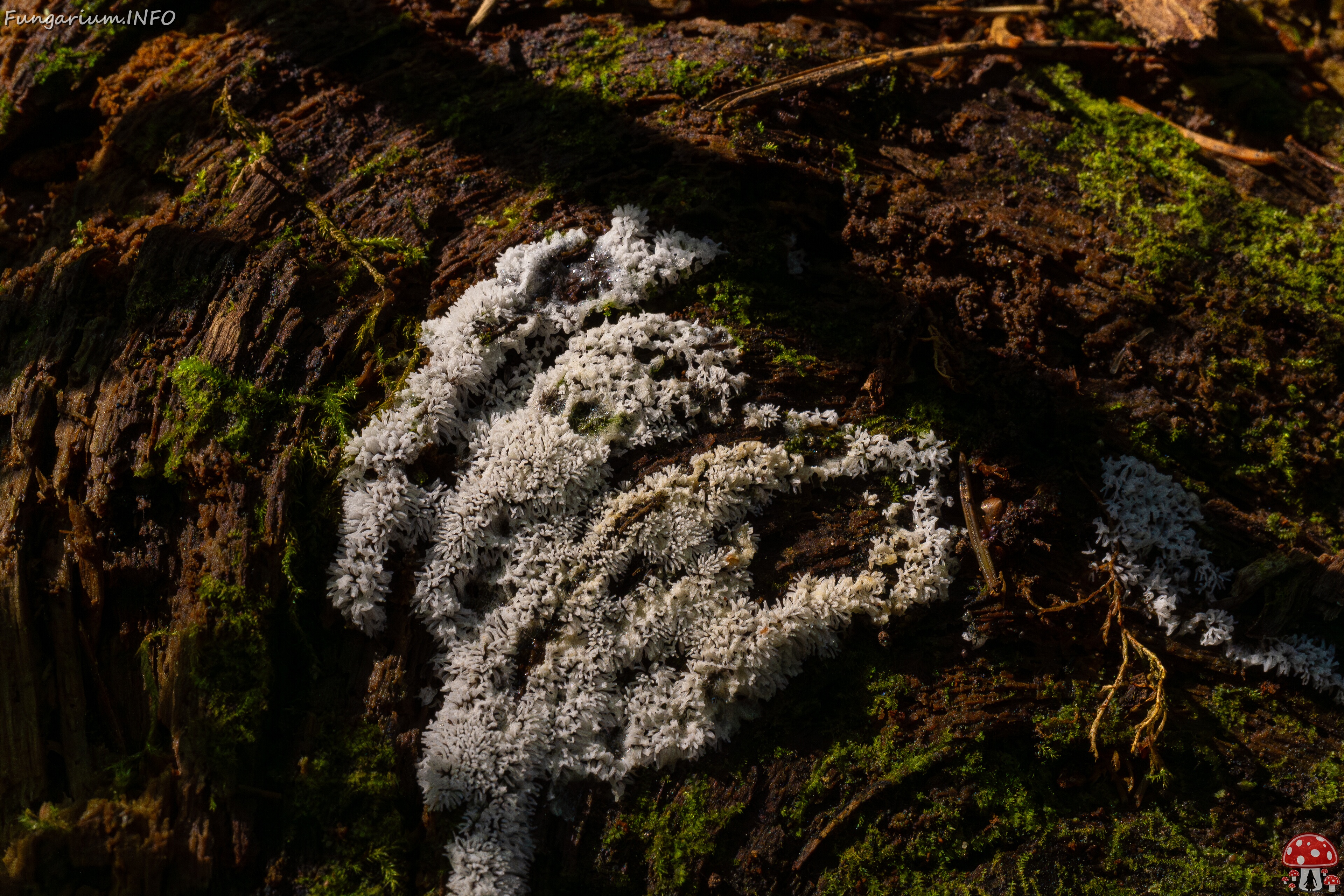
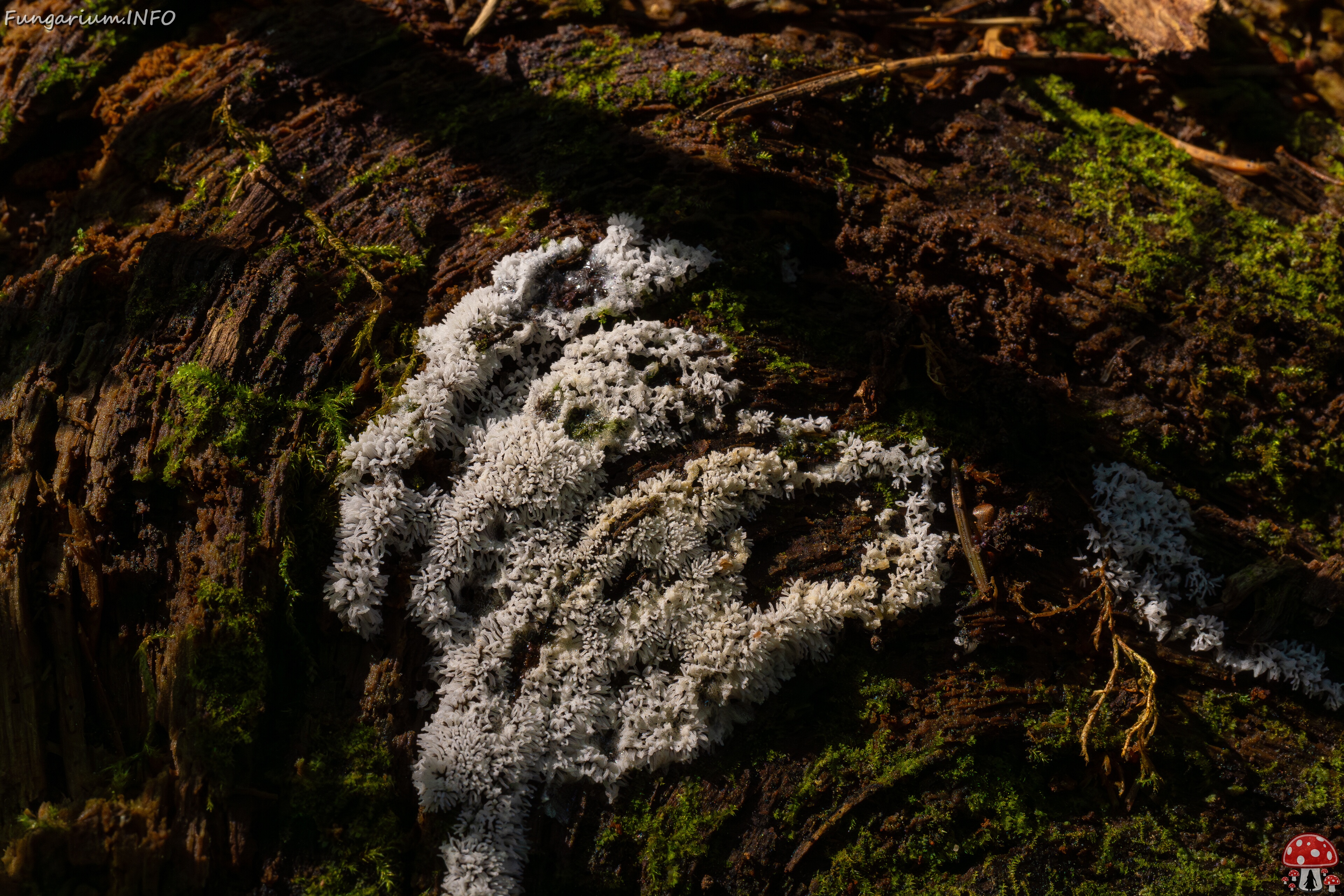
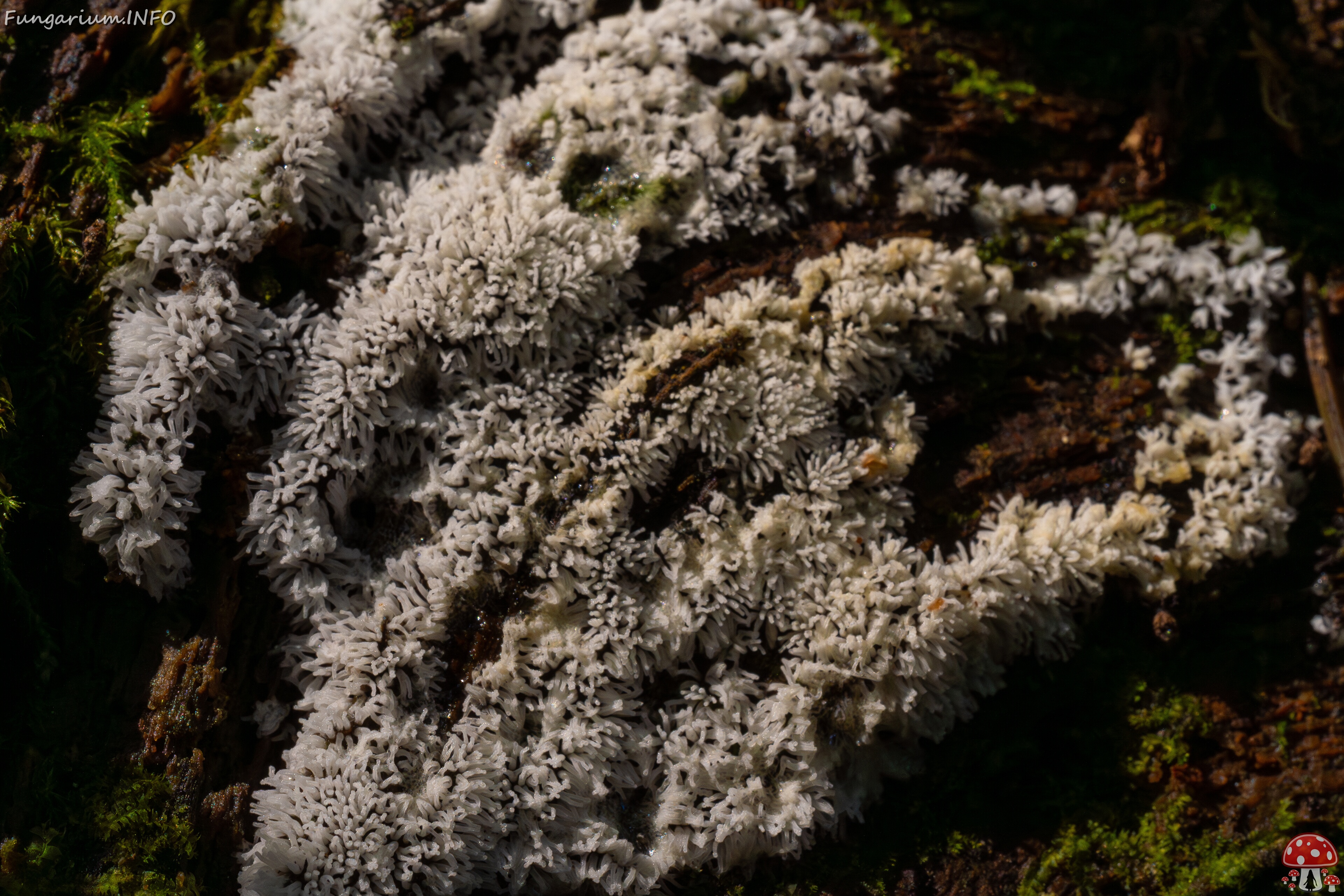
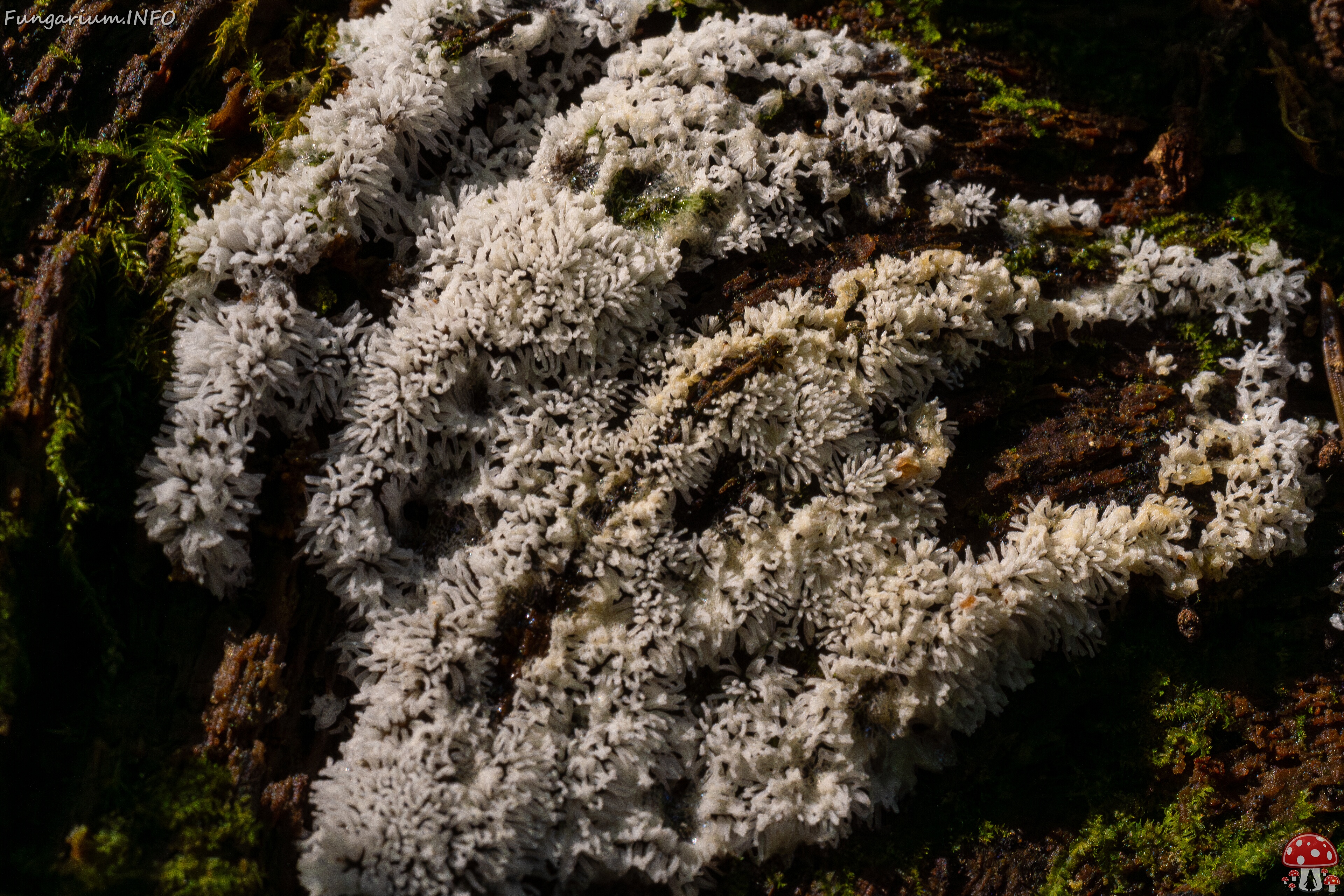
ℹ️ Fruiting bodies: Dense colonies of erect, simple to repeatedly branched, finger- or coral-shaped columns; gelatinous and translucent at first, later white, cream or pale yellow
ℹ️ Peridium: The spores are produced openly on the outer surface rather than enclosed within a sporangium
ℹ️ Attachment: Macroscopic columns sessile on a confluent, mucilaginous hypothallus; each individual spore supported by a delicate microscopic pedicel
⚪🟡 Spore mass white to pale yellow
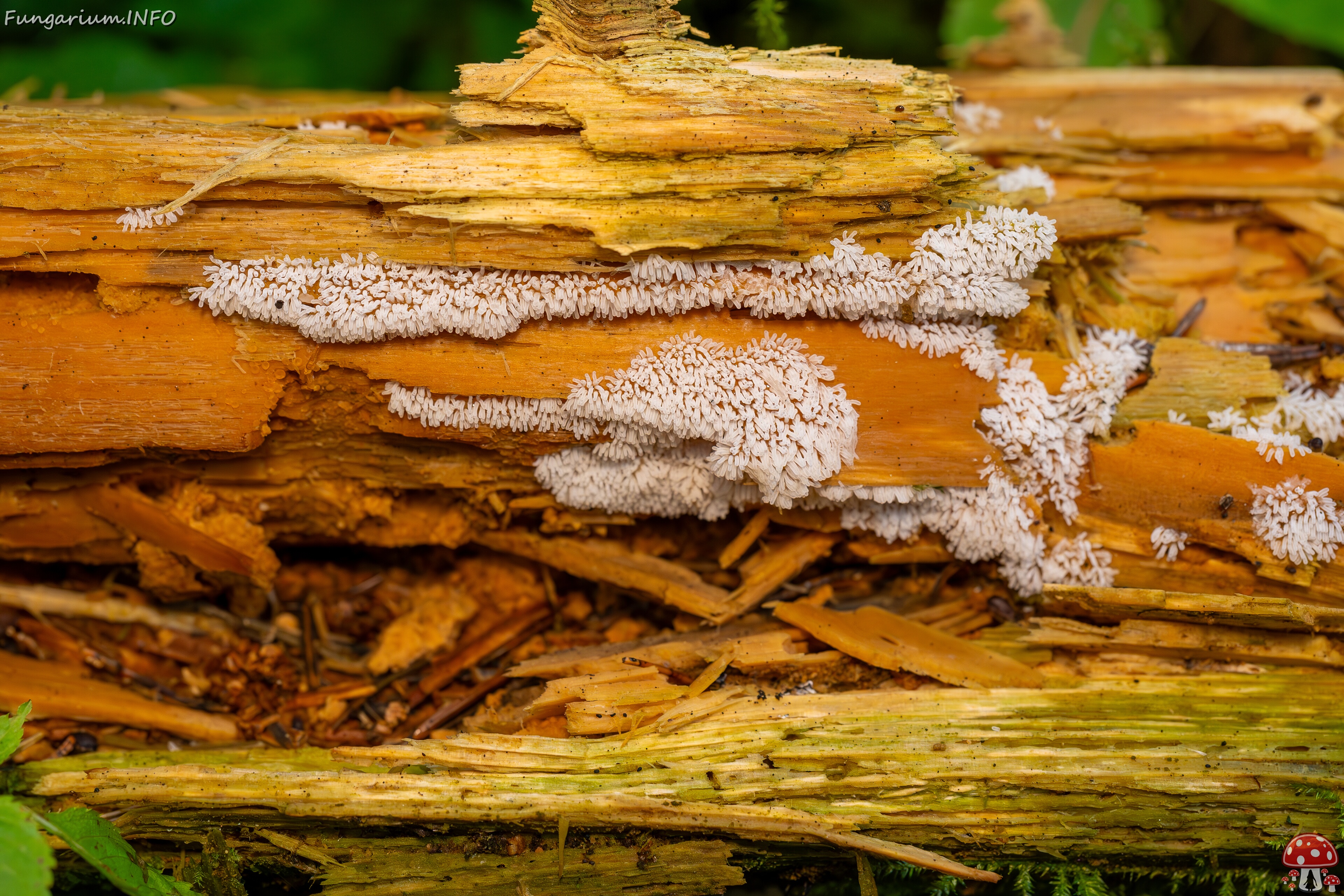
🪵💧 On moist, heavily decayed logs, stumps, branches and other plant debris, often appearing in extensive clustered sheets after rain; late spring to autumn
🔄 Amoeboflagellate cells → multinucleate plasmodium → coral-like sporophores bearing external stalked spores → spores germinate to release amoeboid or flagellated cells
⚠️ Tiny, gelatinous slime mould with no culinary value
📏 Individual columns approximately 1–10 mm tall and ~0.2–1 mm wide; colonies may spread across many centimetres of decaying wood
🔬 Spores smooth, thin-walled, hyaline to very pale yellow, globose, ovoid or ellipsoid, approximately 6–8 × 10–13 µm; borne individually on slender pedicels about 7–20 µm long; true capillitium absent
🔤 Common coral slime forming delicate white, frost-covered miniature antlers or icicles on wet rotten wood




🇬🇧 common coral slime - 🇩🇪 Geweihförmiger Schleimpilz - 🇪🇪 Harjas-limasarvik - 🇷🇺 Цератиомикса кустарничковая