Пеницилл Рокфор - Penicillium roqueforti 8/16/26
🆔 Penicillium roqueforti Thom
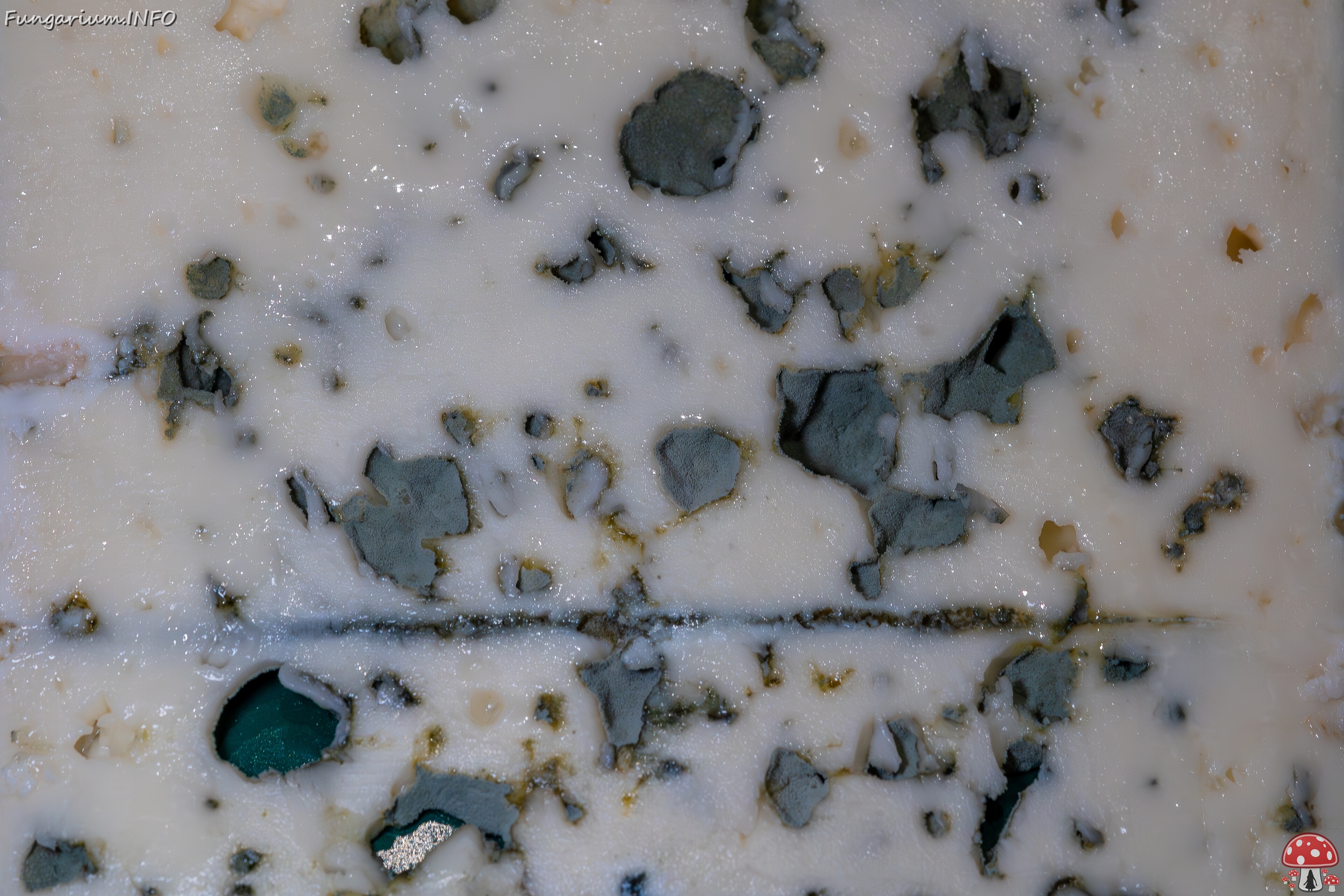
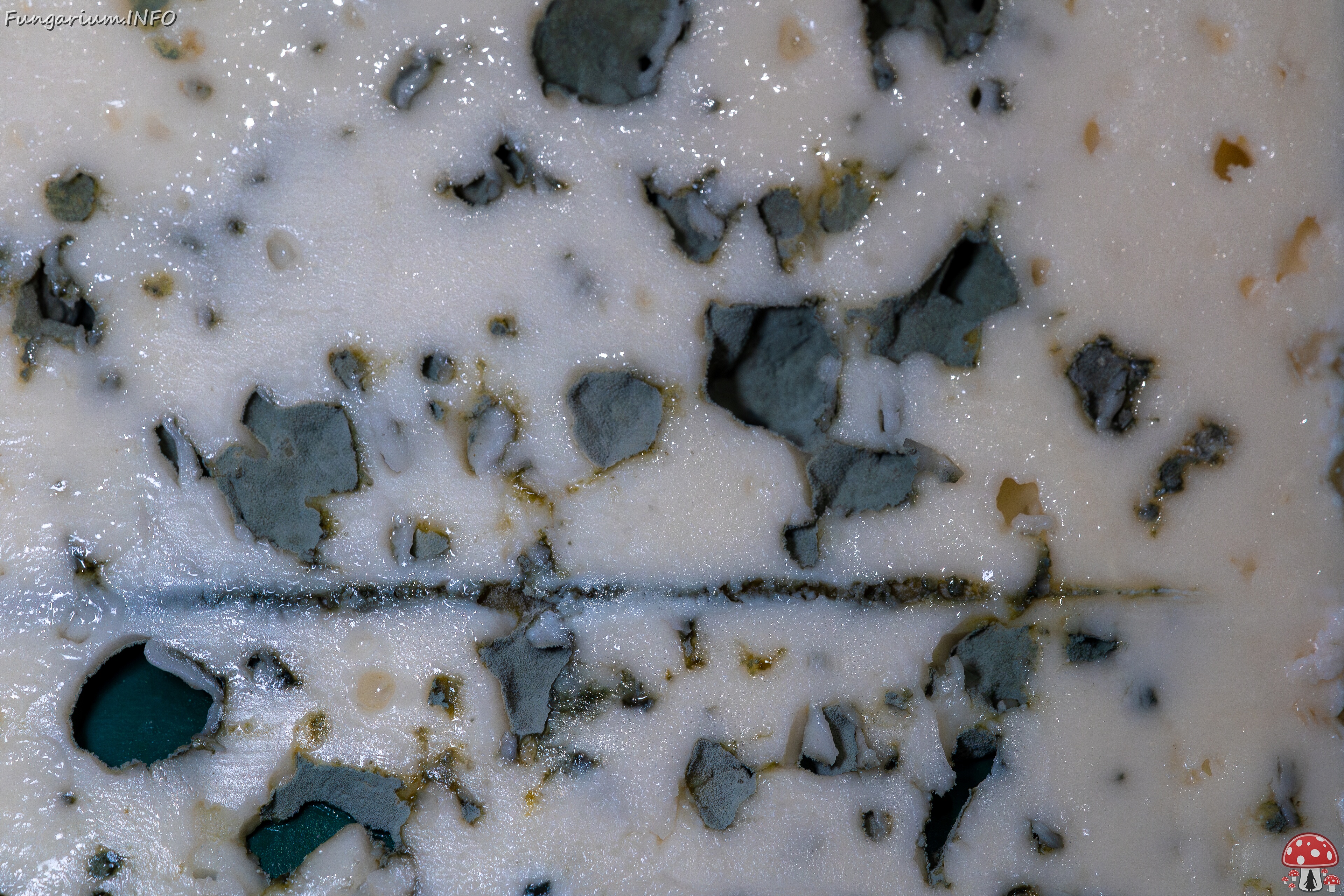
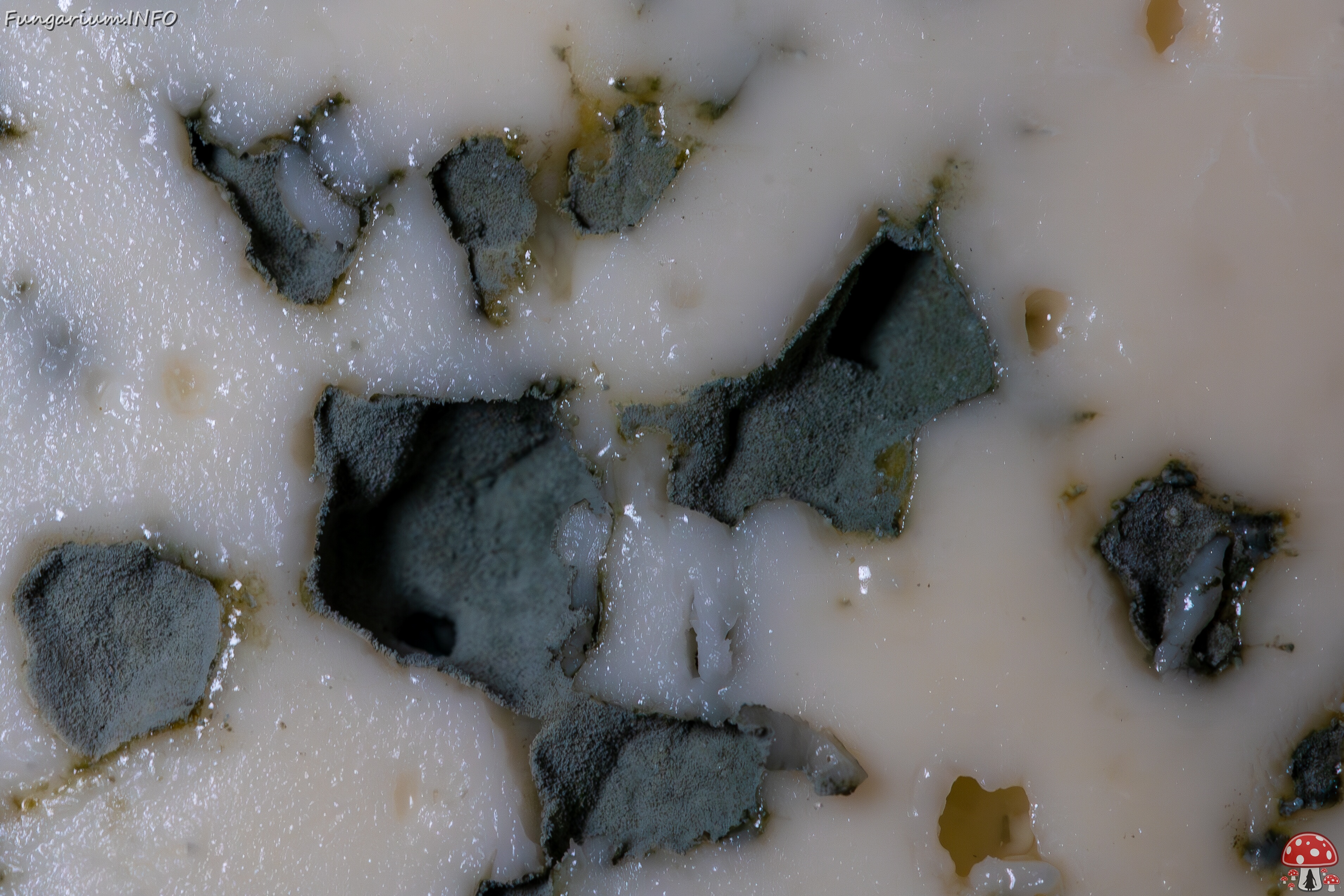
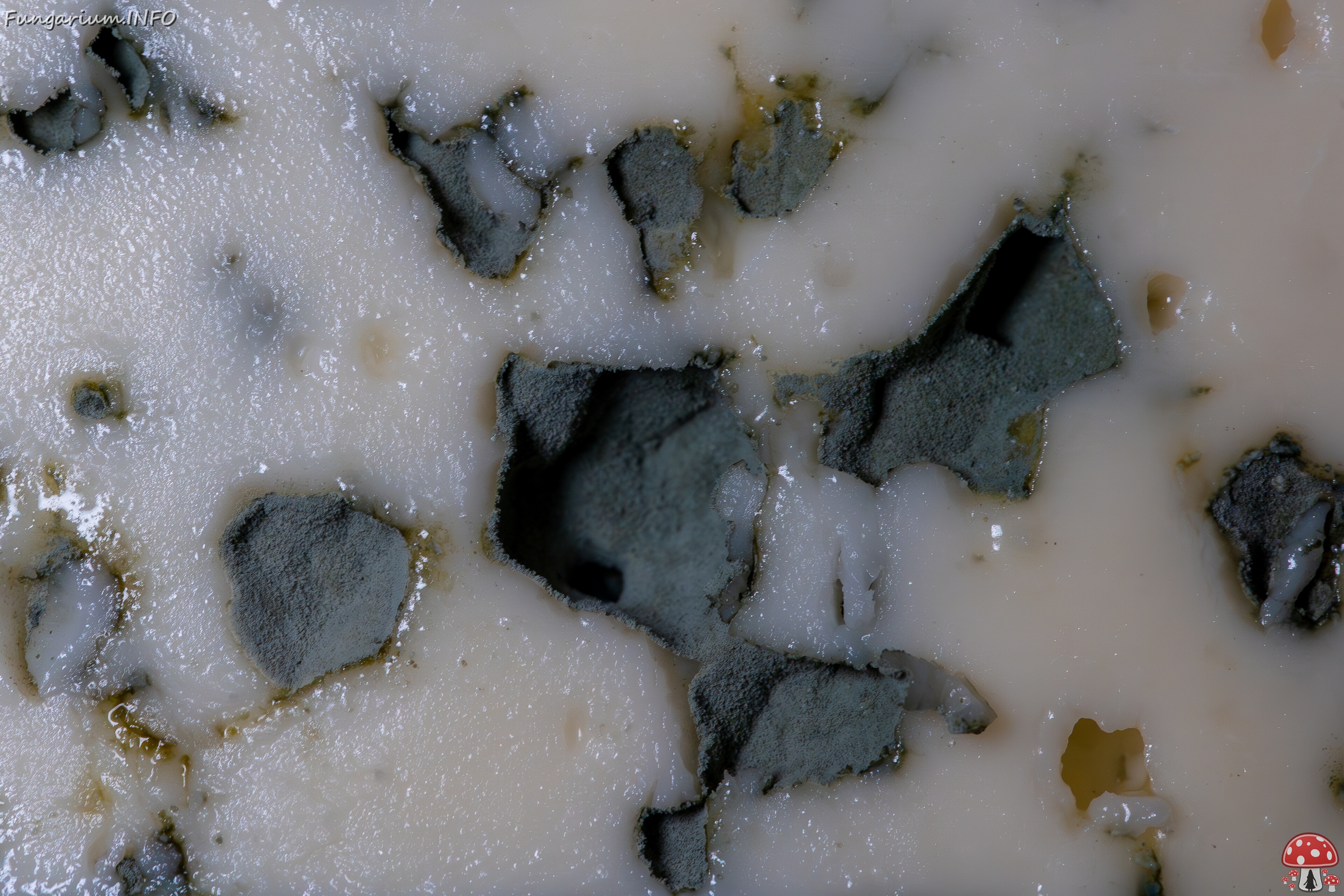
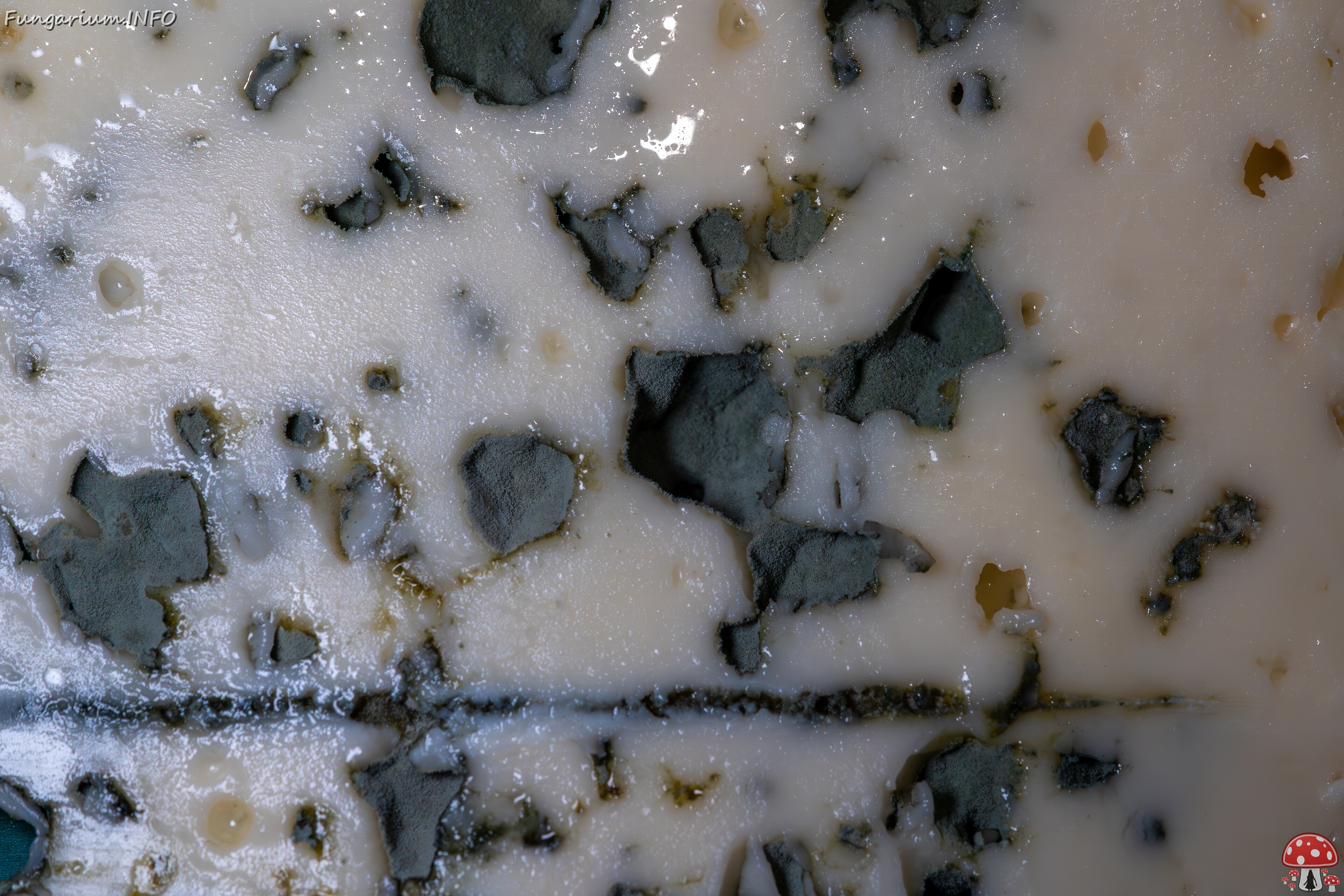
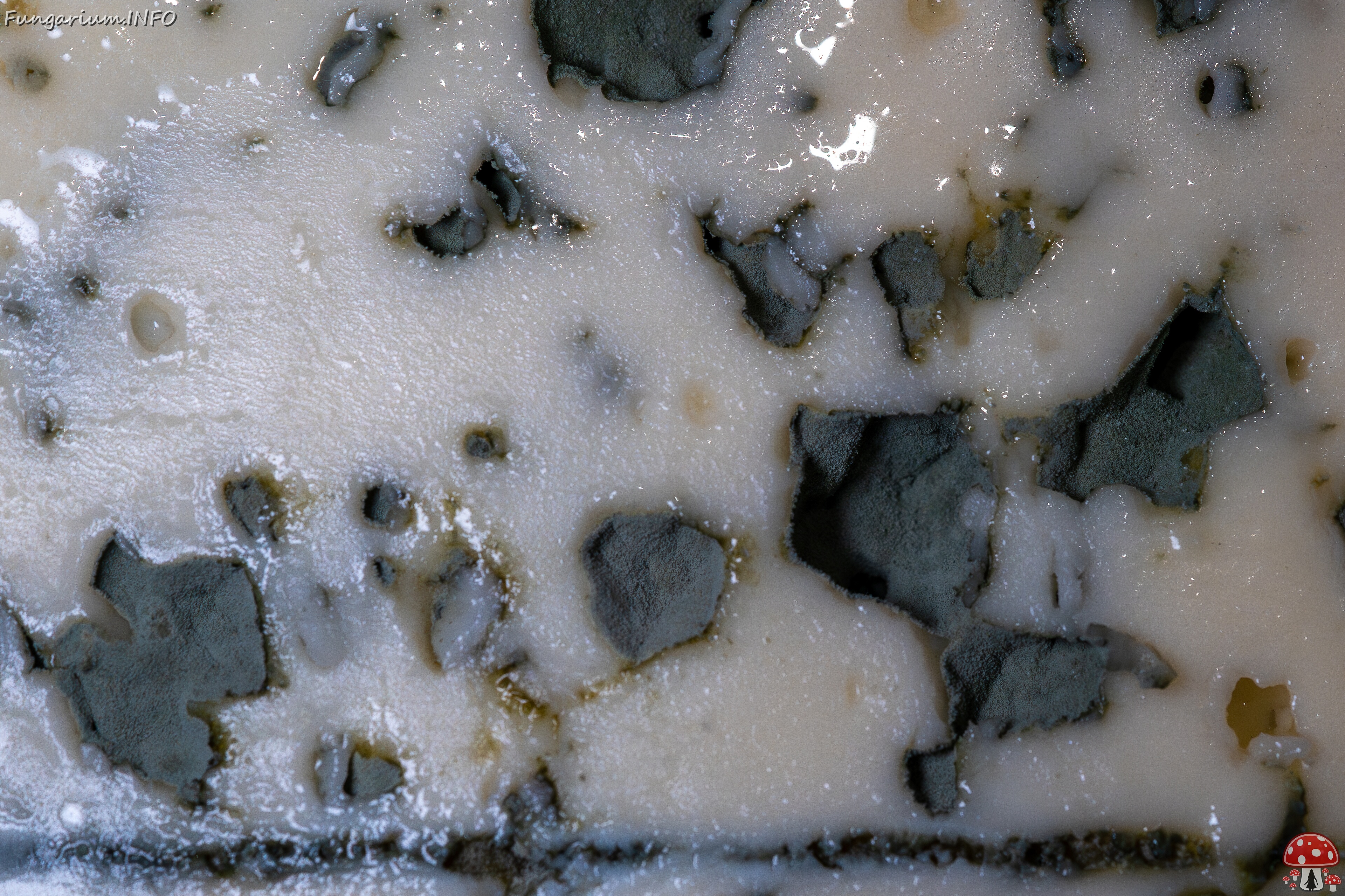
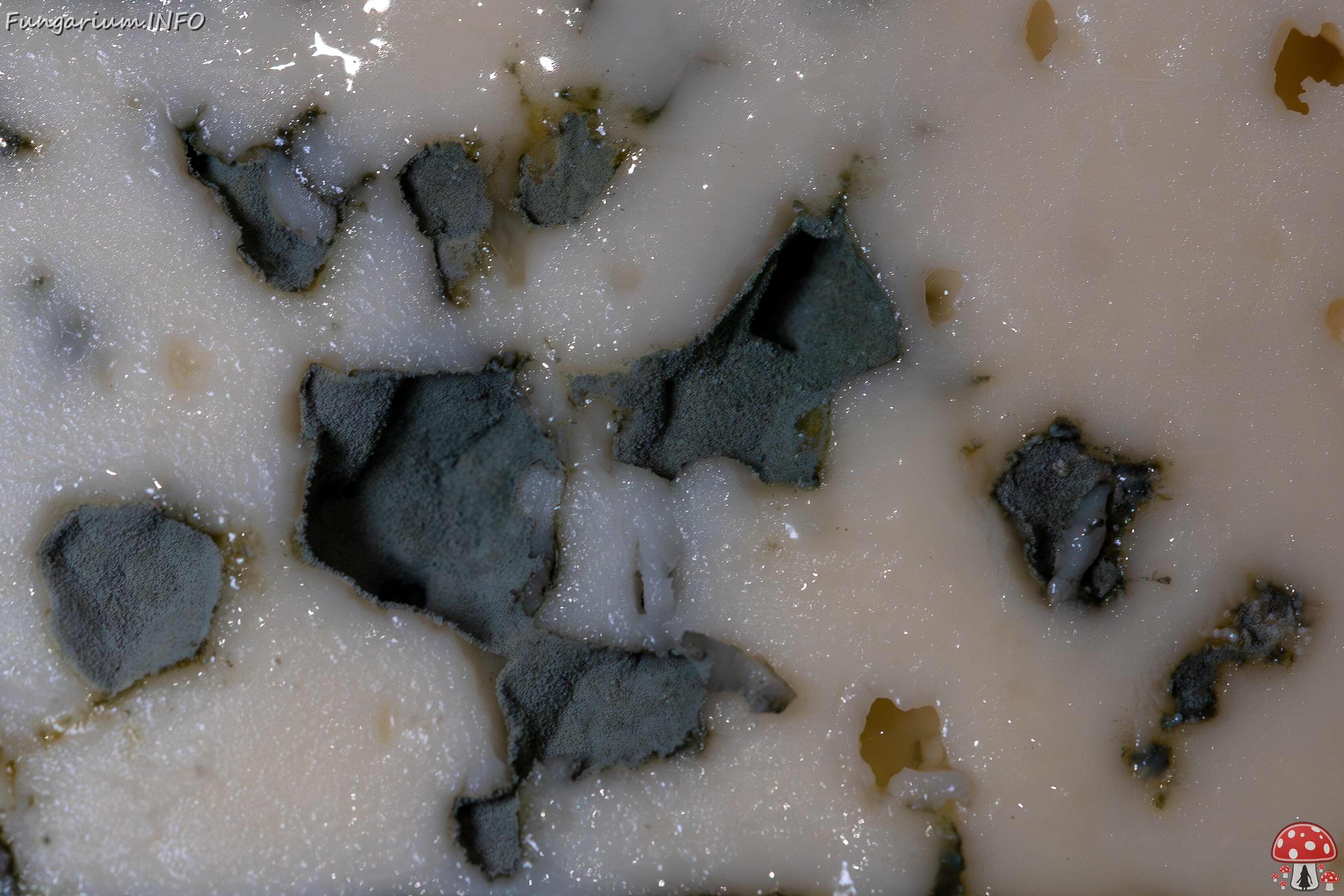
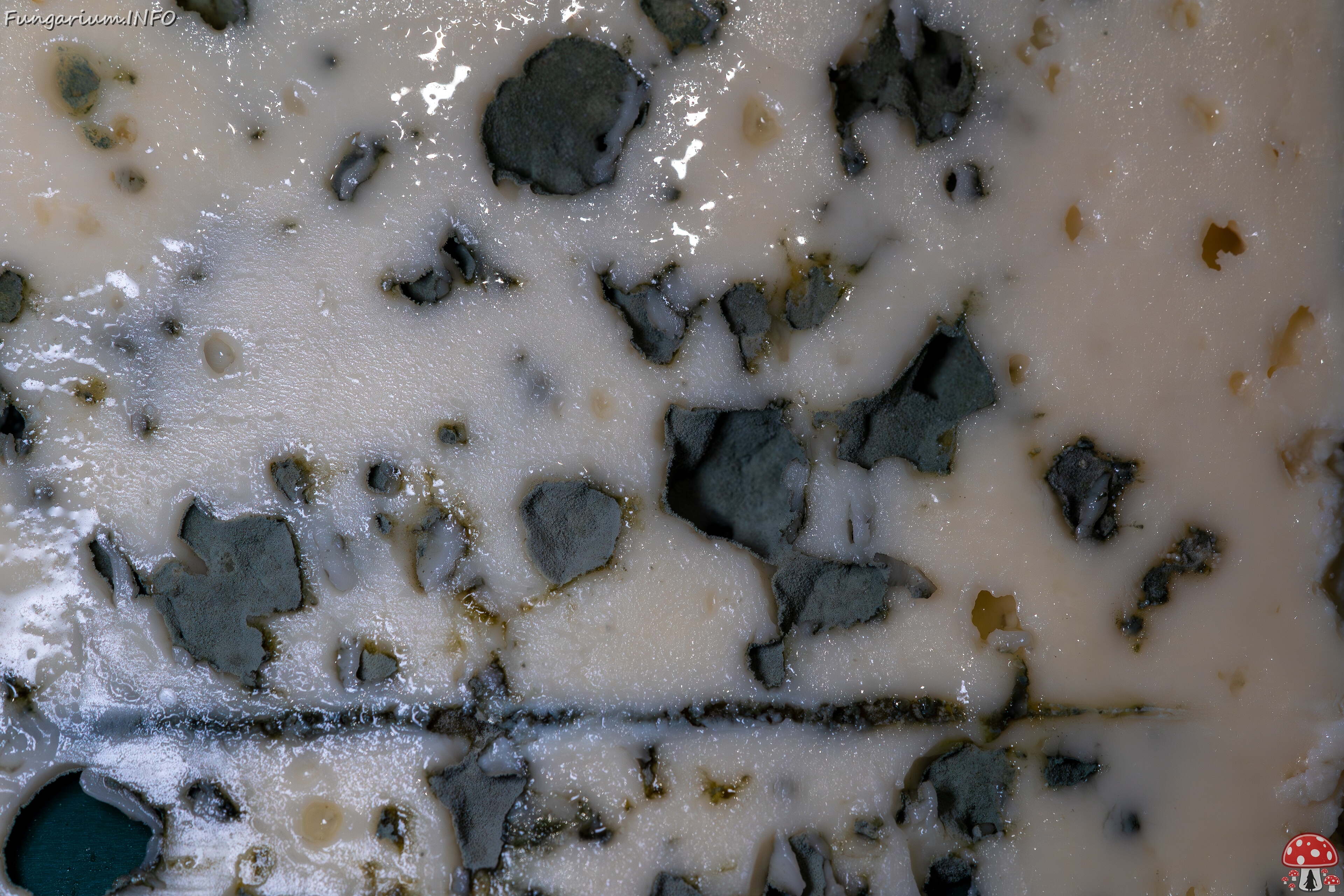
ℹ️ Body: Rapidly growing, dense, velvety to fasciculate mould; mycelium whitish but colonies become blue-green, grey-green to dark olive-green from abundant conidia, often with a paler margin and occasional clear exudate droplets
🔵🟢⚫ Spore mass: Blue-green, grey-green to dark green
🍂 Saprobic; domesticated strains are deliberately cultivated inside blue-veined cheeses such as Roquefort, Stilton and Danablu
🧀 Edible when used as an intentionally selected food-grade culture in properly produced blue cheese
📏 Microscopic filamentous mould forming visible colonies and characteristic blue-green veins or cavities throughout ripening cheese
📐 Colony rapid-growing; laboratory colonies commonly reach ~4–7 cm across within about 1–2 weeks, depending strongly on strain and growth medium
👃 Strong, mouldy and characteristic; during cheese ripening contributes to the distinctive pungent blue-cheese aroma
👅 Characteristically sharp and piquant when present as a food-grade culture in ripened blue cheese
🔬 Conidiophore stipes rough-walled, ~100–200 µm; terminal penicilli predominantly terverticillate, sometimes quaterverticillate and rarely biverticillate; phialides flask-shaped; conidia spherical, smooth, dark green, ⌀ ~3–4.5 µm, in loose chains
🔤 Classic blue-cheese mould forming dense blue-green colonies deliberately cultivated to create the characteristic blue veins, aroma and flavour of Roquefort-type cheeses





Пеницилл Рокфор - Penicillium roqueforti